- FROM SWANSEA:
- 6.95 miles via road
- COUNCIL:
- Neath Port Talbot
- HOMES:
- stone houses and flats
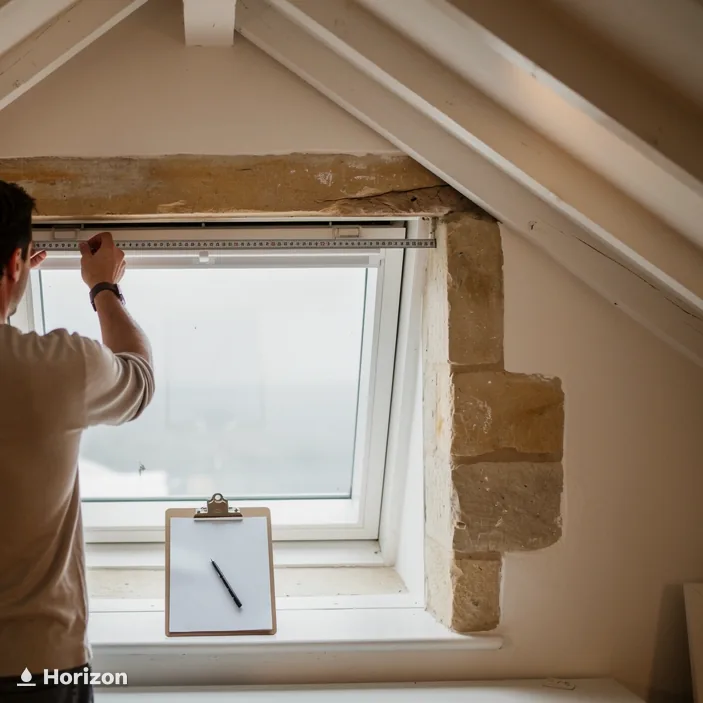
Rooflights and skylights fitted in Llandarcy
Llandarcy, the garden village built beside a refinery: one hundred stone homes, each designed differently, and glass that has to answer to a conservation area.
Free survey / fixed written quote / Building Control notification handled / 10-year workmanship guarantee
Stone walls, designed roofs, wet days
Llandarcy was designed as a garden village for the workers of the BP refinery. Its homes are of stone, with a community centre and a shop, and each property was designed to be different from the next. A village planned that carefully deserves a rooflight chosen with the same care, because glass in the roof is the first thing a passer-by notices when it goes wrong.
Rain behaves according to the roof, and the roof is different from house to house here. On a pitched slope, what matters is the flashing around a roof window, which has to be laid so that the slates or tiles higher up cover it and those lower down sit beneath it. A gust can push water up and sideways, and a short overlap lets it through.
On a flat roof the job is drainage. A fall towards an outlet, a kerb with a decent upstand and an outlet that is kept clear stop water from sitting against the glass. Where a lantern is chosen, the glazing is pitched and the water goes down it onto the roof around.
Inside, water vapour does the damage. A bathroom that is not vented gives its moisture to the coldest pane, and glazing that meets Approved Document L (Wales) keeps the inner surface milder. A kitchen with an extractor that runs on after cooking sends more of it outdoors.
For a house in a conservation area, the glass has another job. It has to look right from the street. A conservation rooflight is made for that, with a slim frame sitting low in the slope.
| House type | Roof | Glazing to consider |
|---|---|---|
| Stone-built houses | pitched, covering varies by house | conservation roof window in the slope |
| Flats in converted or purpose-built blocks | pitched or flat | householder rights do not apply |
| Single-storey rear additions | flat | kerb rooflight, discussed with the council |
| Loft spaces | pitched | roof window with an opening sash |
- STATUS:
- village near Neath
- BUILT FOR:
- BP refinery workers
- HOMES:
- 100 houses and flats
A village built for the refinery
Llandarcy is a village near Neath, in the Neath Port Talbot county borough. It sat next to the site of the first oil refinery in the United Kingdom, and it was designed as a garden village to house the workers at the BP refinery built between 1918 and 1922.
The plan was exact. The village consists of exactly 100 houses and flats, every property designed to be different, all of them of stone construction, with a community centre and a local shop. The mapped conservation area carries the village name.
The refinery's story had its hard moments. The site was damaged by Luftwaffe bombing in 1940. Operations were gradually scaled back in the late 20th century, and the site closed in 1998. The land near the old refinery entrance, close to junction 43 of the M4, is now a business park, while the village itself lies near the same junction.
Old industrial sites leave odd patterns behind them. The land by the old refinery entrance is now a business park, the village keeps its stone homes, and the road connects them at junction 43. For a householder, what counts is the house, and a rooflight survey starts from the roof and works downwards.
The scale of it is small, which matters for a rooflight. A village of 100 homes has few examples to copy, and a window that suits one front slope tells you little about the next house. Local knowledge in a village like this means looking at the roof rather than recalling the street.
Homes designed one at a time suit a survey done one roof at a time. No two roofs here have to be assumed alike, and a rooflight that fits one front slope may not fit the house next door. We look at each roof before any glass is chosen.
Swansea is 6.95 road miles from the village, which sits to its east. Briton Ferry and Baglan are nearby, and our work covers both.
- 100houses and flats, each designed differently
- 1918 to 1922refinery built
- 1998refinery site closed
- CONSERVATION:
- Llandarcy Village area mapped
- PLANNING:
- Neath Port Talbot Council
- SLOPE ROOFLIGHT:
- needs an application
A conservation area, and what follows from it
On the Welsh Government's map, a conservation area named Llandarcy Village covers the village's reference point. In Wales, putting a rooflight into a roof slope of a house inside a conservation area is not permitted development, so it needs a planning application to Neath Port Talbot Council. The map shows boundaries only, and it does not decide the case of a single house. The address is what matters, and the council can confirm it. DataMapWales publishes the conservation area boundaries layer for anyone who wants to look.
The wider rules are in the planning guide for Wales. For a rooflight in a conservation area specifically, our conservation rooflights page describes the type of glass built for older roofs, and it helps to have it to hand when you speak to the council.
Neath Port Talbot Council is the planning authority for the village, and its planning team can say whether the Llandarcy Village area takes in a given address. Where the answer is uncertain, ask the council about a Lawful Development Certificate, which settles the point on paper before the work begins.
Other things can change the picture. A listed building needs listed building consent for a rooflight that affects its special character, and the Historic Environment (Wales) Act 2023 is the law behind that. The consent covers work inside as well as outside, and Cadw's guidance on listed building consent explains it. Flats sit outside householder rights from the start.
A Llandarcy house is also a candidate for the question of replacing rather than adding. Swapping an existing roof window for a new one like for like is still building work, though repairing a window is not, and the new window should reach the current Welsh limit under Approved Document L (Wales).
A planning application and a Building Regulations application are separate. Building control checks the structure, the weight and the energy performance. Where the work is notifiable, we handle the Building Regulations notification with local authority building control or a registered building control approver.
For an old home of architectural or historic interest, Approved Document L (Wales) has a fallback when a replacement window cannot reach 1.4 W/m²K. It allows 1.2 W/m²K at the centre of the pane, or low-e secondary glazing, and it offers no such fallback for a rooflight.
- STREET SLOPE:
- conservation rooflight
- BEDROOM:
- roof window, low noise
- ADDITION:
- kerb rooflight
Choosing the glass for a stone house
Homes built of stone do not tell you what is under the covering. The original roof may have been re-covered since, and the structure beneath it decides how a window can be fitted, which joists need trimming and how the flashing is laid.
For a pitched roof on an older stone house, the conservation rooflight is the place to start. It sits level with the slope, which leaves the roof line undisturbed, and the frame is made to be slim. VELUX makes conservation roof windows, and one of its glazing options is safety lamination, an inner pane laminated so that broken glass stays together, for accidental breakage.
Before the glass, look at what is above the room. A sun tunnel needs a clear run from roof to ceiling, so a sun tunnel suits a landing or bathroom with loft space above it and no outside wall. Its small dome sheds rain fast, and the diffuser spreads the light in the ceiling below.
A bedroom in the roof has a second concern, which is noise. Rain on glass is sharper than rain on tile, and VELUX lists rain noise reduction among glazing options on some windows. It makes sense to ask for it where the window is above a bed.
Electric opening deals with windows you cannot reach. Some VELUX models, the solar and electric ones, come with a sensor that shuts the sash itself at the first rain. Where the window is high on a steep slope, that spares you a ladder and a late-night dash upstairs.
On a rear addition with a flat roof, a flat roof rooflight gives overhead light, and Approved Document L (Wales) puts a new rooflight at 2.2 W/m²K. Roof lanterns have no such figure here, and a lantern on a new addition goes to the council as an open question.
Matching glass to a roof needs a size. VELUX stamps a type sign on the top of each sash, readable when the window is open, giving the width and height in a code. VELUX states that its windows from after 1968 all carry one. Reading that code before a replacement saves guesswork.
A room in the roof also brings fire-safety conditions for the staircase and the escape route, which are set out in Approved Document B (Wales) on the Welsh Government's fire safety page. The survey is the time to go through them against your own house.
A replacement also has to keep ventilation at least as good as before. Trickle vents on the old window mean the new one needs vents of the same size or bigger.
A misted pane pair usually means the sealed unit has given up. Replacing misted rooflights is part of the work, as is fitting new ones. A visit to survey the roof is free. Our price then arrives as a fixed written quote, with ten years of workmanship guarantee confirmed in writing at the end. Phone 01792 929062 or book a survey.
| Roof | Opening glass | Approved Document L (Wales) |
|---|---|---|
| Pitched slope | roof window | 1.4 W/m²K or WER Band B |
| Flat roof on a kerb | rooflight | 2.2 W/m²K |
Llandarcy homeowners ask
Does the Llandarcy conservation area stop a new roof window?
It changes the route rather than blocking it. A rooflight in a roof slope inside a conservation area needs a planning application in Wales, and Neath Port Talbot Council decides it. Ask about a conservation rooflight, which is the glass made for such roofs.
Where can I see whether my house is in the mapped area?
DataMapWales publishes the boundaries, and Neath Port Talbot Council can confirm a particular address. The map stops short of individual properties, so a house near the edge needs the council's answer.
What kind of roof window suits an older stone house?
A conservation rooflight, which sits in line with the slope and has a slim frame. Its look is part of what the council weighs, and the survey checks the roof's size and pitch before anything is chosen.
My flat in the village wants a rooflight. Is that different?
Slightly. A flat has no householder permitted development rights of the kind a house has, and for a house inside the conservation area, a rooflight in a roof slope needs an application. The planning guide explains the background and the council is the starting point.
Can you fit rooflights in the village of Llandarcy?
Yes. From Swansea the village is 6.95 miles east by road, which keeps it comfortably inside our 30-mile radius.
What happens once I ask for a survey?
The survey is free and comes before any price. Next comes a fixed written quote, and the completed work carries a written 10-year workmanship guarantee. Start here.
Nearby towns we also cover
Bulletin Llandarcy
Book your free survey
- Survey:
- before we price
- Quote:
- fixed, in writing
- Guarantee:
- 10 years on our workmanship, in writing
No obligation. Building Control notification handled where the work is notifiable.