- FAULT:
- mist between panes
- SWAP:
- glass unit or whole rooflight
- SIZE:
- read off the old unit

Misted rooflights in Swansea
A cloud between the panes, cleared by new glass.
Free survey / fixed written quote / Building Control notification handled / 10-year workmanship guarantee
Run-off
The kerb, upstand or flashing around the glass is looked at before a new unit goes in.
Condensation
Mist between the panes is the glass unit; steam on the room face is the room.
Rain noise
The glass chosen for the swap can change how a downpour sounds in the room.
- ROOM FACE:
- wipes clear
- OUTER FACE:
- wipes clear
- BETWEEN PANES:
- stays put
- CAUSE:
- failed seal
Telling mist from steam from dirt
Three things can cloud a rooflight, and only one of them lives between the panes.
Start with a dry cloth and a bright hour. Wipe the room face of the glass, then look at the outside face from the garden or a landing window. Anything that clears was never a sealed-unit problem. A grey haze, a bloom or a line of droplets that stays put between the two panes is moisture inside the glass unit, and no wiping on either face will shift it.
A double-glazed rooflight is two panes with a sealed gap between them, and triple glazing has three. One VELUX specification pairs a 6.8 mm laminated inner pane with 16 mm of argon and a 4 mm toughened outer pane. The gap is meant to stay shut to the room and to the weather, so moisture inside it means the seal has let go. Low sun after a shower lights up a haze that an overcast sky would hide, which is why a misted skylight can first get noticed on a bright morning after a wet week.
Steam on the room side
A bathroom roof window that fogs after a shower is doing what any cold surface does when warm, wet air reaches it. The moisture lands on the room face of the glass and clears as the room settles. A kitchen rooflight above the hob behaves the same way. Both point to ventilation: an extractor that runs, a window that opens, a trickle vent left on the setting it was built to have. Better glass narrows the gap between the air and the surface, though it cannot make a steamy room ventilate itself.
Grime on the outside
Dirt and dried rain film cloud the outer face and look like a dull, even haze from below. Cleaning shifts them, and a coating made for the job can slow their return. Self-cleaning glass is one of the options when a unit is swapped, and it comes up again with the other glass choices.
What to note before you ring
A few details speed the survey along. Which room sits under the glass, and is the roof above it flat or pitched? Is the haze in one pane or across the whole unit, and has it spread over the winter? Does the window open, and is it manual or electric? Is there any damp on the lining or the ceiling nearby? None of this needs a ladder, and the answers tell us what to bring to the roof.
A glass fault is not a leak
Mist is a glass fault. A leak is rain getting past the weathering around the glass, and it shows as damp on the ceiling, the lining or the room side of the frame. An old roof can have both at once, so the survey takes in the glass and the weathering around it in a single visit. Our answer on whether a misted rooflight is a problem goes further, and the guide to why rooflights mist between the panes covers the cause.
| Where the cloud sits | What it points to | Next step |
|---|---|---|
| Room face, clears as the room settles | Steam from the room | Ventilate |
| Outer face, even dull film | Dirt and dried rain | Clean, or a coating |
| Between the panes, stays put | Sealed unit has failed | Survey |

- GLASS ONLY:
- frame stays
- WHOLE UNIT:
- frame and glass
- KEEP:
- sound frame, kerb
- LOOK AT:
- flashing, upstand
New glass in the old frame, or a whole new rooflight
The sealed unit is the part that has failed; the frame, kerb and flashing around it are what the survey has to judge.
Two different jobs sit under the heading of misted rooflight replacement. In the first, the sealed glass unit is swapped and the frame, the kerb and the flashing stay where they are. In the second, the whole rooflight comes out and a new one goes into the opening. The mist looks the same from the floor either way, so the choice between them waits for a close look at everything around the glass.
The questions that settle it concern the rest of the unit. Does the frame sit square and sound? Does a sash that opens still close with an even gap all the way round? Is the kerb or upstand sound, and is the junction with the roof covering weatherproof and watertight? Where the answers are good, new glass in the existing frame can be the sensible swap. Where they are poor, new glass in a tired frame spends fresh money on an old problem.
Frame material comes into it, though less than people expect. Whatever the frame is made of, the question is the same: is the frame still square and tight, or has it moved? Security is part of the same look. Where a unit can be reached from a flat roof or an extension, the locking and the glass are considered with that in mind.
Glass unit swapped
- The frame, kerb and flashing stay where they are
- Suits a frame that is square, sound and tight at its joints
- The new unit is made to the measurements of the old one
Whole rooflight replaced
- A new frame and new glass go into the opening
- Suits a frame that has gone out of true
- Lets the glass specification change across the whole unit
What a flat roof shows you
On a flat roof, look at what the rainwater does after the shower has passed. A puddle that stays against the kerb long after the rain has stopped is a question about the roof's fall and its outlet as well as the glass. A new unit set in a kerb with a dip beside it meets the same standing water the old one did, so the survey notes where the falls run before anyone talks about glass.
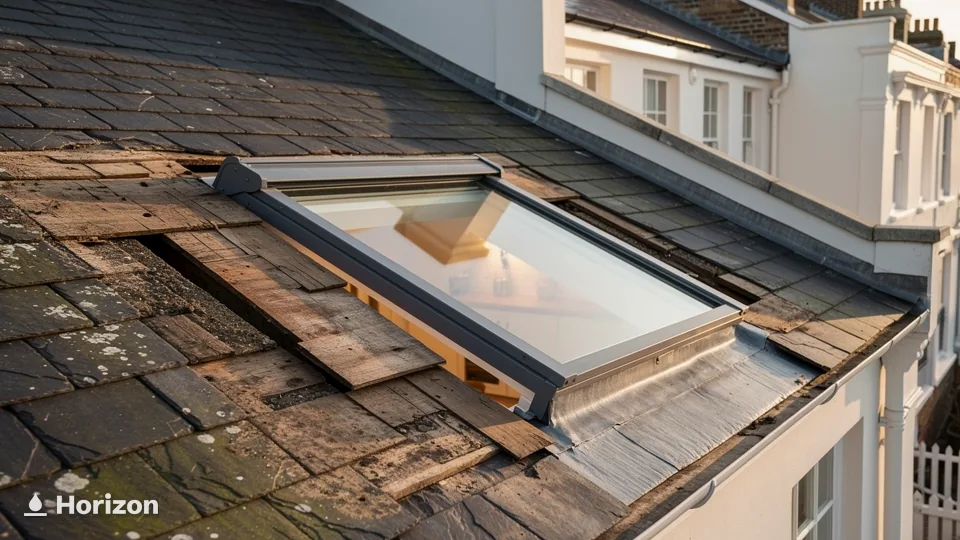
Pitched roofs raise other questions. A roof window sits in the plane of the slope, dressed in with flashing that laps the covering around it, and the flashing and the laps around the unit need looking at too. Whether the covering and flashing around an old window still suit a new one is something the survey looks at before the quote is written.
Lanterns, and a change of size
Where a roof lantern's glazed panels are sealed units, a lantern over an orangery or a kitchen extension can mist like any other glass. Whether one can be swapped on its own while the frame stays depends on the lantern in front of us, and the survey settles it. Our roof lanterns page covers how they live with the weather, and the flat roof rooflights page does the same for glass on a kerb.
A swap is also the moment people ask about a bigger window or a different product. A different size in the same opening is a question for the survey. A bigger hole, or a rooflight where there was none, becomes a new-opening job, where the roof structure matters: the rafters or joists around the opening are looked at and may need trimming. The planning guide for Wales explains where permission comes in.
The sibling guide on new glass or a whole new unit goes through the decision step by step, and the answer on how long sealed units last covers what to expect from the replacement.
- TYPE SIGN:
- top of the sash
- VELUX CODE:
- width and height
- FLAT ROOF:
- kerb size
- LANTERN:
- upstand size
Reading the size off a unit already in the roof
A new glass unit is only as good as its measurements, and the old unit carries clues to them.
Open the sash of a VELUX roof window on a dry day and look along the top edge. A metal type sign sits there, and VELUX says every window it made after 1968 has one. Read the size code on it and you have the window's width and height. In VELUX's size table, MK04 is 78 × 98 cm, MK06 is 78 × 118 cm and UK04 is 134 × 98 cm, so a code read off an old sign narrows the job before anyone climbs a ladder.
A code is a starting point. What counts is what is actually in the roof: the width of the frame, the pitch it sits at, the way it is dressed into the covering. The type sign is a VELUX feature, so the sign trick helps with VELUX only, and a bespoke unit that was made to measure has no VELUX code to read. For an old unit with a worn or missing sign, the measurements come from the opening itself, and a photo of the sign is a handy thing to have to hand when you get in touch.
On a pitched roof the slope itself is read as well as the width, because the pitch the window sits at is part of what a replacement has to suit. The survey records it along with the frame size.
Three VELUX size codes
- MK0478 × 98 cm
- MK0678 × 118 cm
- UK04134 × 98 cm
Flat rooflights and their kerbs
A flat rooflight is sized to its kerb or upstand. In Approved Document L (Wales), a rooflight is a glazed unit installed out of plane with the roof on a kerb or upstand, which is why the kerb matters as much as the glass: its outer dimensions, its height above the roof covering and whether it sits square. Where the kerb is supplied with the rooflight as one assembly, the 2.2 W/m²K limit takes in the kerb along with the glass.
Upstands under lanterns
A roof lantern can stand on an upstand built by the roofer or builder, and its glass is then sized to that. Brett Martin's installation sheet for its lantern asks the builder for an upstand of 150 mm or more in height, and it suggests building that upstand level. When a lantern's glass is swapped, the height and level of the existing upstand are part of what gets measured.
The same visit is the time to see where water goes after a storm. Standing water beside a kerb, a gutter that has overflowed onto the glass, or a covering that has slipped near a window all show up on the roof and are better found before a quote than after it. Where the unit is a roof window in a loft bedroom or on a landing, the survey also looks at how the room beneath is lined and ventilated, since that affects how the new glass will behave on a damp morning. Rafters, trimmers and the lining round the opening are looked at where they can be seen.
The VELUX windows page and the roof windows page cover the pitched-roof side of the work in more detail.
Terms on the roof
- Sealed unit
- The glass unit: two or three panes with a sealed gap between them.
- Type sign
- The metal plate on the top of a VELUX sash that carries its size code.
- Kerb
- The raised frame a flat rooflight sits on above the roof covering.
- Upstand
- The short wall around an opening that carries a lantern or rooflight.
- Flashing kit
- The weathering pieces that dress a roof window into the slope.
- LOFT:
- wind-driven rain
- BATHROOM:
- steam
- KITCHEN:
- deep plan
- GLASS:
- double or triple
What the new glass can do for the room below
The room under the roof decides which glass options are worth asking for.
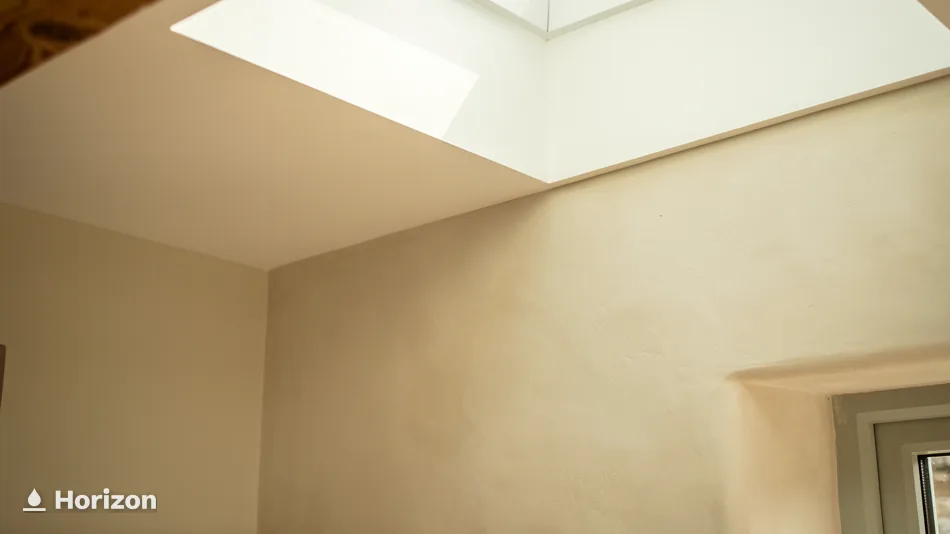
A swap brings the chance to choose the glass again, and the room underneath should decide the choice. A loft bedroom, a bathroom and a kitchen extension ask different things of the same square of glass, and the weather in Swansea exposes the differences quickly.
| Option | What the maker describes | Maker |
|---|---|---|
| Rain noise reduction | A glazing option on roof windows | VELUX |
| Safety lamination | Inner pane that stops glass falling into the room | VELUX |
| Easy-to-clean coating | A dirt-repellent finish | VELUX |
| Self-cleaning glass | Daylight loosens dirt, rain washes it away | Pilkington Activ |
| Double or triple glazing | Energy efficiency and sound reduction on flat and curved rooflights | VELUX |
The loft bedroom in a gale
In a loft bedroom, a roof window takes wind-driven rain straight on the glass, a short distance above a pillow. Glazing with rain noise reduction, which VELUX lists among its glazing options, is aimed at that room. Which windows and variants offer it varies, so we check the one in question. Where the old window opens, the same visit covers whether an electric version suits the room, because VELUX's solar and electric range has a rain sensor built in, and VELUX says it shuts the window by itself in rain. Our page on electric opening rooflights goes through the options.
The bathroom and the kitchen
A bathroom roof window sits where steam gathers, so the glass choice and the way the window opens belong in the same conversation. A unit that opens lets steam out at the source, and one that stays shut depends on the extractor. If the room has no extractor at all, that is worth saying at the survey.
In a bathroom, VELUX also lists safety lamination, a laminated inner pane that stops glass falling into the room after accidental breakage. For steam, an opening window clears a room faster than any glass can, and a fixed unit leans on the extractor. In a kitchen extension, VELUX lists double and triple glazing for its flat and curved glass rooflights, citing efficiency and sound reduction. That choice sits beside the daylight the room already gets, because a lantern or flat rooflight over a deep kitchen is there to carry natural light to the worktops.
Frames shape the look from inside as much as the glass does. A frame in aluminium or uPVC carries its own colour and sightlines, and a manufacturer's range sets which finishes exist, so the choice made at survey is between what that range offers for the opening in question. A deep room that gets its natural light from one unit above the table or the worktop is the room where a glass specification matters most, because there is no second window to pick up the slack.
Glass that stays clear
Dirt on the outer face is a different complaint from mist, and the glass can be chosen to answer it. A dirt-repellent coating figures among the VELUX glazing choices too. Pilkington Activ is a coating whose uses include roof glazing: sunlight loosens dirt on it and rain carries the dirt off. Where the glass sits above a stairwell, or on a flat roof that is awkward to reach with a cloth, that is worth raising at survey.
Energy efficiency sits behind all of this. A replacement roof window or rooflight in Wales should meet the limits in Approved Document L (Wales), and a better-performing unit keeps the room closer to the temperature of the house around it. Our energy efficient rooflights page covers the glazing side, and how each rooflight handles the rain covers the run-off, condensation and noise side by product.
- RULES:
- Wales
- ROOF WINDOW:
- 1.4 W/m²K
- ROOFLIGHT:
- 2.2 W/m²K
- LISTED:
- consent first
What the Welsh rules say about swapping glass or a whole unit
Wales has its own Approved Documents, and a like-for-like swap and a new opening follow different routes.
Replacing a window, roof window or rooflight like for like still counts as building work in the eyes of the Building Regulations, since windows and rooflights are classed as controlled fittings. A job that swaps just the glazing and leaves the old frame in place does not count as building work where the energy rules are concerned. Which of the two a job is depends on what is being swapped, and the survey settles it.
Approved Document L (Wales), existing homes
- 1.4W/m²K, roof window (or WER Band B)
- 2.2W/m²K, rooflight
The energy limits
Approved Document L (Wales) is guidance. It says a new or replacement roof window should have a U-value no worse than 1.4 W/m²K, or a Window Energy Rating of Band B, and a new or replacement rooflight no worse than 2.2 W/m²K. In that document's terms a rooflight is glazing that stands on a kerb or an upstand, and roof lanterns are not named in it, so the figure for a lantern gets confirmed with building control.
Building control and ventilation
Building control in Wales comes in two kinds: the local authority's service and a registered building control approver, and the choice between them is yours. The Planning Portal's page on where to get approval explains both. Approved Document F (Wales) wants a home's ventilation to be no worse than before once a window is replaced, and if trickle vents were in the old window, the replacement's vents should be at least as large. Whether that applies to a particular roof window is settled at survey.
Planning, and a new opening
A swap in the same opening is one thing and a new rooflight is another. In Wales, a new rooflight in a roof slope needs planning permission where the house is in a conservation area, the Gower AONB, Bannau Brycheiniog National Park or a World Heritage Site. Only houses carry householder permitted development rights, which leaves flats and maisonettes outside them. On a house, a council can remove those rights with an Article 4 direction, and a condition in the house's original planning consent can remove them too. The Welsh Government's page on roof lights and the Building Regulations adds the detail, and our planning guide for Wales sets out the planning side in full.
Older roofs and listed houses
The conservation rooflights page covers the glass made for older slate roofs. A listed house sits under separate rules, and listed building consent is the one that matters most.
- SURVEY:
- free
- QUOTE:
- fixed, in writing
- PAPERWORK:
- handled
- GUARANTEE:
- 10 years, written
Booking the survey, and living with the new glass
The survey comes first, and a little attention afterwards keeps the glass clear.
The first move is the survey. Ring 01792 929062, message the WhatsApp number or use the quote form, and a free survey comes first, so the roof, the glass and the room beneath are all seen before any figure is written down. A fixed written quote follows it.
What moves the figure is covered in our answer on the cost of misted rooflight glass. The wider picture is on the costs page. Where the work is notifiable, we handle the Building Regulations notification with local authority building control or a registered building control approver. The workmanship is guaranteed for 10 years, and the cover is a document you keep, which our guarantee page describes.
In order
- Survey The glass, the frame, the kerb or flashing and the room below are looked at together.
- Quote A fixed written quote follows the survey.
- Swap The new unit or rooflight goes into the opening.
- Paperwork The notification goes in where the work is notifiable.
Living with the new glass
New glass asks for little. Keep the outer face clean enough to see the sky through, and keep leaves and moss off the roof beside the unit so rain keeps leaving as it should. On a flat roof, glance at the outlet after a storm. In a bathroom, run the extractor or open the window after a shower, so steam leaves by the vent and not through the glass.
Keep the written quote and the guarantee document with the house papers, together with the size code of the new unit. A later owner, or anyone asked to look at the roof years on, then has the paperwork and the size in one place.
Where we work
Horizon Skylights Swansea covers the city of Swansea and a ring of about 30 road miles round it, reaching parts of Neath Port Talbot, Carmarthenshire and Bridgend. The areas covered page lists the towns, and a town missing from the list is still worth asking about. Glass swaps are installation work, and so are whole-rooflight replacements, in homes across that ring.
Cost readout
What moves the figure
- Glass specificationTriple glazing, lamination and coatings change the unit.
- Opening typeA fixed unit, a manual one or an electric one.
- SizeA bigger unit means more glass and more frame.
- AccessHow easily the roof can be reached.
Guides and answers for this service
- GuideMisted rooflight: new glass or a whole new unit?11 min read
- GuideWhy rooflights mist up between the panes11 min read
- AnswerHow much does it cost to swap a misted rooflight unit?7 min read
- AnswerIs a misted rooflight a problem, or just ugly?6 min read
- AnswerHow long do rooflight sealed units last?6 min read
Asked about misted rooflights
Where do I find the size of a VELUX window that has misted?
With the sash open, the metal type sign is on its top edge. VELUX says every window it made after 1968 has one, and its size code gives the width and height. MK04, for instance, is 78 × 98 cm in VELUX's table. Pass the code on when you get in touch, and the survey checks it against the opening in the roof.
Does swapping only the glass count as building work?
Swapping just the glazing and leaving the old frame in place is excluded from building work where the energy rules are concerned. Taking out the whole roof window or rooflight and putting in a like-for-like replacement is inside it. The survey works out which one your job is, and the notification follows where it applies.
Can better glass go into the replacement unit?
The choice turns on the window and the variant. VELUX lists rain noise reduction, safety lamination and a dirt-repellent coating, Pilkington Activ is a self-cleaning option, and double or triple glazing is available on flat and curved rooflights. Whatever goes in, a replacement rooflight in Wales should be no worse than 2.2 W/m²K under Approved Document L, and a roof window 1.4.
How will I know whether the frame has to come out as well as the glass?
The survey looks at whether the frame sits square, whether a sash still closes evenly, and whether the kerb or upstand and the flashing around it are sound. Mist only tells you about the glass, so the rest has to be judged on the roof.
Is mist between the panes the same as a leak?
Mist lives inside the glass unit. A leak means rain getting past the weathering and turning up as damp on the ceiling or round the frame. Both can happen on one roof, so the survey checks for both. Our answer on whether a misted rooflight is a problem goes into it.
Which areas around Swansea do you reach for a misted rooflight swap?
Anywhere within roughly 30 road miles of Swansea, which includes places in Neath Port Talbot, Carmarthenshire and Bridgend. Our list of towns shows where we go.
Bulletin Misted rooflight replacement
Book your free survey
- Survey:
- before we price
- Quote:
- fixed, in writing
- Guarantee:
- 10 years on our workmanship, in writing
No obligation. Building Control notification handled where the work is notifiable.