- FROM SWANSEA:
- 6.37 miles, road
- COUNCIL:
- City and County of Swansea
- HOMES:
- includes pub flats
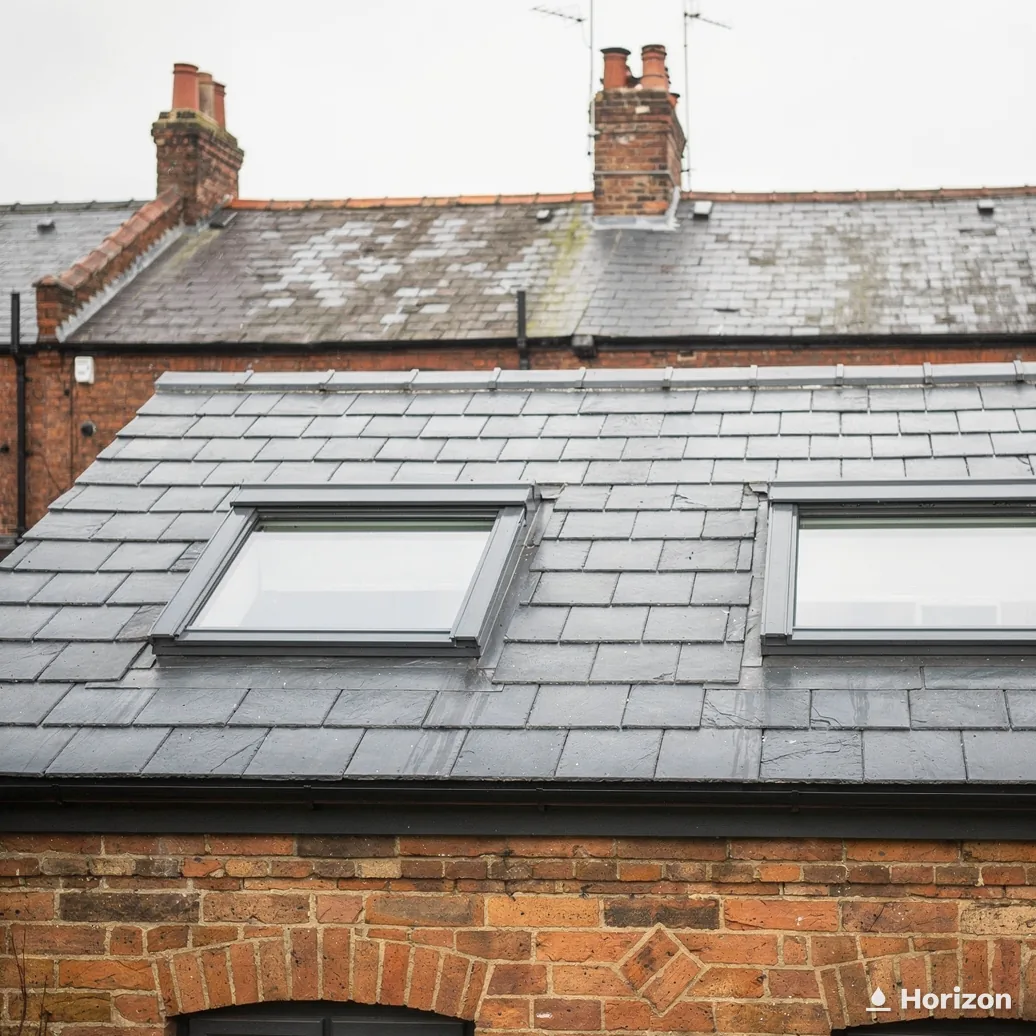
Skylights and rooflights in Glais
Glais takes its name from a stream, so water is the first thing a roof here has to settle.
Free survey / fixed written quote / Building Control notification handled / 10-year workmanship guarantee
A village named for running water
The word glais is one of the Welsh words for a stream, and it turns up all over Welsh place-names. A village that carries it is a fair reminder of the job a roof has. Water arrives, and the only question is where it goes next.
Over a pitched slope the answer is down, past the tiles and into the gutter, as long as nothing gets in its way. A roof window sits in that flow. The flashing around its frame has to overlap the covering above and below it, so that the stream of water finds a clear path round the frame and never a seam to creep into.
Over a flat roof the water has to be led. A rooflight on a kerb needs the roof around it to fall towards an outlet, and makers of flat rooflights typically recommend that the kerb be built with a fall. Where water lies against a kerb, the seal and the glass are working against it all year.
Inside, the same water shows up as steam. A bathroom roof window is the first place to notice, because the warm air from a shower meets glass that is cooler than the walls. A vent or an extractor that runs for long enough, and glazing chosen to meet Approved Document L (Wales), keep the pane from turning into a drip tray.
Between the panes is the third place. A rooflight whose sealed unit has failed clouds from within, and wiping the outside will never clear it. That calls for replacement, and the size of the old window is where the replacement starts.
| Kind of home | Roof | What to check first |
|---|---|---|
| Detached houses | pitched | pitch, and fixed or opening |
| Semi-detached houses | pitched, tiled | room under the slope |
| Flats, converted or purpose-built | pitched or flat | route to permission |
| Rear extensions | flat | fall on the roof |
- POPULATION:
- 831 (2021 estimate)
- NAME MEANS:
- stream
- LANDMARK:
- Y Garth moraine
A village named for a stream
Glais is a semi-rural village in Swansea. It lies north-east of the city, and the road distance is 6.37 miles. The 2021 census estimates put the village population at 831 residents.
The landscape comes with a Welsh name and an Ice Age history. The moraine, named Y Garth, is regarded as the largest and most impressive of the South Wales valley moraines, and the site includes a natural wall that drops 130 feet at the front of the moraine, formed from material deposited from further up the valley during the last Ice Age.
The village has a railway past, too. Glais has previously hosted two railway stations, both part of the Swansea Vale Railway. In 1891 a Welsh Baptist chapel, Peniel, was built on Station Road, and it closed in 1999. More recently the community centre was refurbished in 2021, and in 2025 its committee worked to fund a new outdoor seating area with benches and daffodil planters.
Glais is one of the places we cover around Swansea. Close neighbours include Clydach, Alltwen and Pontardawe, all three inside our working area.
Those details tell you about the place and nothing about the roofs. Roof shapes decide the product here as anywhere. A pitched slope suits a roof window. Over an extension, a flat roof calls for a kerbed rooflight or a lantern. A hall or landing without a window suits a sun tunnel. Where a home is a flat, the first question moves from glass to permission, and the next chapter takes that up.
- 831residents, 2021 census estimate
- 130 ftdrop at the front of the moraine
- 1891Peniel chapel built on Station Road
- PLANNING:
- Swansea Council
- FLATS:
- no householder rights
- LISTED:
- consent needed
Flats, houses and the right road to permission
The village pub closed permanently in October 2025 and has since been converted into private flats. That recent change is a useful reminder of how a home's type steers the planning route. Permitted development for a rooflight is a householder right, and it belongs to houses. Flats and maisonettes fall outside householder rights, so a rooflight on a flat has no householder permitted development route. The Welsh Government's page on planning permission for flats and maisonettes explains the position.
City and County of Swansea Council decides planning applications for Glais. For a house, the first thing to settle is whether it stands on protected land. A new rooflight in the roof slope of a house in a conservation area, the Gower AONB, Bannau Brycheiniog National Park or a World Heritage Site needs planning permission, and Glais itself is outside the Gower AONB. Our Wales planning guide for skylights covers the conditions for a house on any other land.
Even then, rights can be removed. A council may remove them with an Article 4 direction for an area, and so can a condition attached when the house first got permission. A listed house falls under the Historic Environment (Wales) Act 2023, and a rooflight that would change its character needs listed building consent from the council. That consent covers work inside as well as outside, including historic fixtures, fittings and details, so even small jobs can need it, and doing the work without it may be a criminal offence. Cadw, the Welsh Government's historic environment service, publishes each listed building record in Cof Cymru. Cadw's guidance on consent says what counts.
The council's planning team will say where an address stands, and for anyone wanting certainty before work starts, the council's Lawful Development Certificate gives the formal answer.
Building Regulations are a second matter. Building Regulations approval generally comes into play for a brand-new rooflight, since the opening usually alters the roof and the roof must take the load. For notifiable work, we handle the Building Regulations notification with local authority building control or a registered building control approver. If a loft is to become a bedroom, the escape rules apply as well, and our Building Regulations guide for skylights sets out what they ask.
- SIZE CODE:
- on the type sign
- CLOUDY UNIT:
- sealed unit failed
- SWAP:
- counts as building work
Replacing what is already in the roof
Where a roof already carries glass, replacing it is a different job from fitting it new. The first step is to find out what is there. Open the sash of a VELUX roof window and look along its top edge, where a metal type sign carries the size code. Windows VELUX made after 1968 all carry one, and the code records width and height. VELUX publishes the sizes, for example MK04 at 78 by 98 cm and MK06 at 78 by 118 cm.
A swap changes the paperwork a little. Exchanging a window or roof window for its equivalent counts as building work, whereas a repair does not, and renewing just the glass while the frame stays falls outside the energy rules. When a whole roof window is replaced in Wales, the new one should meet 1.4 W/m²K or Window Energy Rating Band B under Approved Document L (Wales). A rooflight on a kerb should meet 2.2 W/m²K.
A rooflight whose glass has gone cloudy inside is one reason to start. Misting inside the glass usually means the seal has failed, and our misted rooflight replacement deals with exactly that. A bathroom roof window that steams over on the inside is a different complaint. That points to ventilation, and an extractor that runs long enough may solve it without any glass changing.
Older homes bring a further option. Where a replacement window or roof window on a home of architectural or historic interest cannot reach 1.4 W/m²K, Approved Document L (Wales) allows a fallback of 1.2 W/m²K at the centre of the pane, or low-e secondary glazing. There is no such fallback for rooflights.
Replacement brings a ventilation rule with it. Approved Document F (Wales) asks that a replacement leave the home's ventilation as good as it was, so trickle vents in the old unit mean vents no smaller in the new one.
Over the extension, the same logic holds. Over a roof with no pitch, the options are a flat roof rooflight set into a low frame, or a roof lantern standing taller, and we fit and replace both kinds. Either needs the roof around it to shed water, so the roof deserves a close look alongside the room. A lantern for a brand-new extension goes to the council for confirmation. In the hall, a sun tunnel asks for the least from the roof.
Each job starts with a free survey. Then comes a fixed written quote, and the finished job comes with our written 10-year workmanship guarantee, handed over once the glass is in. Call 01792 929062 to arrange a visit, or use the online form.
| Size code | Width | Height |
|---|---|---|
| MK04 | 78 cm | 98 cm |
| MK06 | 78 cm | 118 cm |
| UK04 | 134 cm | 98 cm |
What Glais householders ask
Does a flat in a converted building get the same rooflight rights as a house?
It does not. Householder permitted development does not extend to flats or maisonettes, so a rooflight there has no householder permitted development to fall back on. The conditions that apply to houses are laid out in the skylight planning permission guide. Glais has recent experience of the change, since its former pub is now a set of private flats.
How can I tell what size my old roof window is?
Open the sash and look at the top of it for a metal type sign. With a VELUX, the size code on that sign gives the width and height, and windows made after 1968 all carry one. Noting the code down, and photographing the sign if you can, is a good start for any replacement, because it identifies the window you hold today.
What does a cloudy rooflight in Glais usually mean?
Cloudiness trapped inside the glass usually means the sealed unit has let go. Steam that forms on the inside surface is a separate matter and often says more about ventilation than about the glass.
Who takes the planning application for a Glais roof?
City and County of Swansea Council handles planning, and you can choose its building control service or a registered building control approver for Building Regulations. Planning looks at the look of the roof and its setting, while building control looks at the structure and the energy performance of what is fitted. The planning team can also say whether an address is on protected land.
Is Glais within your working area?
Yes. The road from Swansea is 6.37 miles, heading north-east, which sits easily within our cover across Swansea, Neath Port Talbot, Carmarthenshire and Bridgend.
What do I get before any price is given?
A free survey looks at the roof together with the room under it, and a fixed written quote comes after. Once the glass is fitted, the work comes with our 10-year workmanship guarantee in writing. Ask for a survey here.
Nearby towns we also cover
Bulletin Glais
Book your free survey
- Survey:
- before we price
- Quote:
- fixed, in writing
- Guarantee:
- 10 years on our workmanship, in writing
No obligation. Building Control notification handled where the work is notifiable.