- FROM SWANSEA:
- 6.7 mi to Swansea, road
- COUNCIL:
- City and County of Swansea
- HOMES:
- roof shape decides
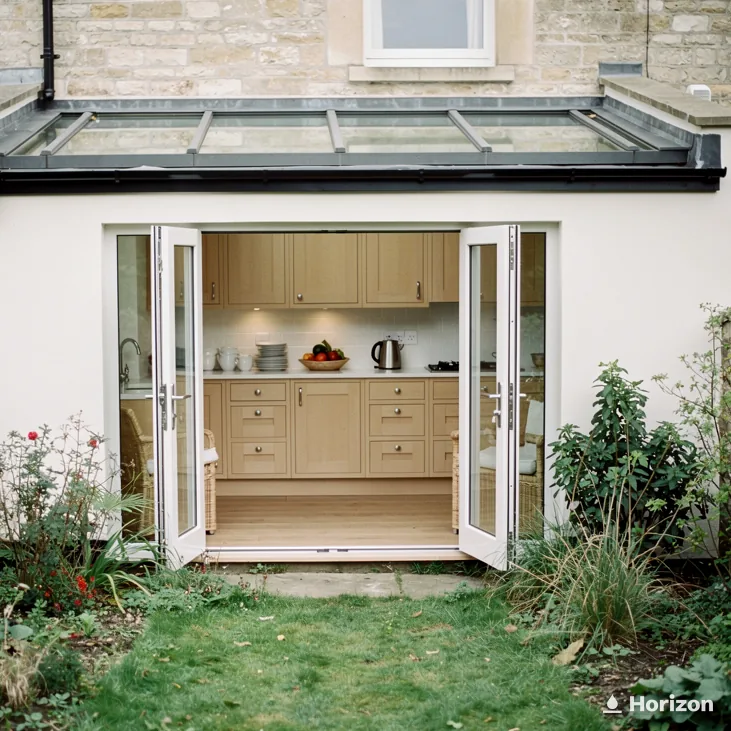
Skylight and rooflight fitting in Clydach
Clydach in the Swansea Valley: roofs that have to shed the rain, and rooflights fitted so the glass stays clear of it.
Free survey / fixed written quote / Building Control notification handled / 10-year workmanship guarantee
Keeping the valley rain moving
Clydach grew in the Swansea Valley, and the Swansea Canal was built through its centre between 1794 and 1798. A canal exists to keep water going somewhere useful. A rooflight has the same assignment in a smaller way, and it fails the day water stops going anywhere.
That failure looks different on each kind of roof. A pitched slope hands rain downhill by itself, so the risks are at the edges. The flashing around a roof window has to overlap the slates or tiles properly, because water pushed sideways by a gust will find any gap that was left. Fit and finish at the edge of the frame matter more than the size of the glass.
A flat roof is a different problem. Water collects at a kerb if the roof surface dips towards it, and a rooflight sitting in a dip spends its life with a puddle at its foot. The fall around the kerb and a clear outlet are what prevent it.
Indoors, a kitchen that steams while the hob is on, or a bathroom after a bath, loads the air with water that goes to the coldest surface available. Glazing built to meet Approved Document L (Wales) helps keep the inner pane warmer, and a vent or extractor that really runs does the rest.
Sound is the quieter half of the story. Heavy rain on a glass roof is heard in a bedroom more than rain on a tiled roof over a plasterboard ceiling. Rain noise reduction appears in VELUX's list of glazing choices, and whether a given window offers it depends on the product, so ask for it by name when a loft bedroom is the plan.
Dirt matters too. Glass that cannot be reached with a cloth turns green and grey, so access is worth thinking about when deciding where a rooflight goes. For glass that is awkward to clean, self-cleaning coatings exist as an option on some rooflight glazing.
| House type | Roof | Glass for the roof shape |
|---|---|---|
| Terraced houses | pitched, slate | roof window in a back slope |
| Semi-detached houses | pitched, tile | roof windows, with a tube light for a landing |
| Bungalows | pitched, low pitch | window made for shallow roofs, or a light tube |
| Single-storey extensions | flat | flat rooflight or lantern over the kitchen |
- STATUS:
- village in the Swansea Valley
- CANAL BUILT:
- 1794 to 1798
- COUNCIL:
- City and County of Swansea
From small valley village to through road
In the early 19th century, Clydach was a small village in the Swansea Valley. Coal was a valuable commodity in the South Wales Valleys during the Industrial Revolution, and Clydach grew as a through road for the goods moving between Swansea and the many mines and heavy metal industries. The plant was the heart of the village and one of the largest employers in the valley for many years.
The Swansea Canal, 16 miles long, was built through the centre of the village between 1794 and 1798. It stayed profitable until 1902, when losses were first reported. Roads and the M4 do the carrying now. The village lies close to the motorway, which can be reached by the bypass or by the old road via Ynystawe.
Old maps tell the growth story. The 1878 map shows number 1 St John's Road as the old St John's School for Girls, Boys and Infants, linked to St John's Church. By 1899 the village had grown substantially, with the school on Twyn-y-Bedw Road expanded and a second school built a little further up the same street. St Mary's Church does not appear on that map, where its site is a blank open space.
In 1918 the Sunday school still appears on the map under the area name of Vardre, close to Mount Pleasant, and Graig Felin was known as Aber-Clydach.
The present has its own additions. Eight houses and two bungalows have been built on one piece of land as part of an affordable housing scheme led by Pobl Group, a homeless charity operating in South Wales. New homes of that kind have different roofs from a Victorian terrace, which is the sort of detail we notice when looking at a roof.
Swansea lies 6.7 road miles away, the village being to its north-east. Glais and Pontardawe are nearby, and we also fit and replace rooflights in both.
- 16miles of Swansea Canal, built 1794 to 1798
- 1902losses first reported on the canal
- 6.7miles by road, Swansea to the village
- PLANNING:
- Swansea Council
- LISTED HOUSES:
- need consent via the council
- AONB:
- not in the Gower AONB
What the City and County of Swansea needs to hear
Planning applications for a Clydach house go to the City and County of Swansea. Clydach stands beyond the Gower AONB boundary, so the peninsula's special planning rule has no bearing on it. Whether your own rooflight needs an application is a matter of the house and its roof, and the tests to apply are in the Wales planning permission guide.
Some homes need an answer before the conditions are even read. Householder permitted development was never written for flats or maisonettes, and a house loses it where an Article 4 direction or a condition on its original permission has removed it. Listed houses are another case. A rooflight that changes a listed building's special character needs listed building consent, and it is the council that handles the application. Cadw publishes the national guidance on listed building consent.
For a lantern, the position is firmer than for a flat rooflight. A lantern stands well clear of a flat roof on its upstand, so a lantern set onto flat roofing that is already in place normally comes under a planning application. If the lantern is for a new extension, that is a point we take up with the council.
When the paperwork is unclear, asking the planning team costs nothing, and a Lawful Development Certificate puts a firm answer on record. Keep it with the house papers.
Building Regulations ask a separate question from planning, which is whether the work is built to the standard. A brand new rooflight will generally need approval from a building control body. Where the work is notifiable, we handle the Building Regulations notification with local authority building control or a registered building control approver. A like-for-like replacement is also building work, though repairing a unit is not. For the glass, Approved Document L (Wales) sets 1.4 W/m²K or Window Energy Rating Band B as the level a new or replacement roof window should reach.
- OLD VELUX:
- read the type sign
- LANDING:
- tube of daylight
- KITCHEN EXTENSION:
- lantern or flat rooflight
Fitting glass to a valley house
Replacing an old roof window starts with its size. Look at the head of the sash on a VELUX with the window open: the type sign there carries a code for the width and the height. Each VELUX produced after 1968 has that sign, according to the company. The roof window that goes in should meet the 1.4 W/m²K guidance.
A bungalow has little roof pitch to play with. VELUX offers a roof window meant for pitches from 10° to 20°, and designs its flat roof dome for roofs between 0° and 15°. Anyone with a shallow roof needs the pitch measured before a product is picked, and that is a survey job.
Over a kitchen extension, a roof lantern sheds water down its glazing onto the roof around it. Brett Martin's guidance puts the upstand under its lanterns at 150 mm tall or more, ideally built level. Up to 5° of pitch is tolerable, though the company says the result will probably look lopsided. A flat roof rooflight is the plainer choice, and it gets 2.2 W/m²K as its Welsh figure.
A hallway or landing in the middle of a house can be the darkest place in it. A sun tunnel runs a reflective tube from a small dome to a ceiling diffuser, giving soft daylight without a window wall. It suits a drizzly morning, when the dome sheds rain without a fuss and the hall still has a bright patch at the top of the stairs.
Roof windows you cannot reach are good candidates for electric opening. Where the sash is electric or solar-powered, VELUX builds in a rain sensor that shuts it when rain begins, so a window over a high stairwell can stay open on a mild morning without anyone having to watch the sky.
Ventilation comes with any window swap. The house's airflow should be no worse afterwards than before, and where the old frame carried trickle vents, the new one is fitted with ventilation of equal or greater size, set by the occupant or by an automatic control. That detail is easy to lose in a quick swap.
Light also matters indoors. A bungalow with a deep plan can have a hallway or bathroom that gets nothing from a wall window, and a roof window or tube there brings in daylight from above without moving a single wall.
If the glass has clouded between its two panes, the seal around the unit has probably let go. Misted rooflights are part of our replacement work, alongside new fitting.
Whichever it is, the first step is a free survey. Once that is done a fixed written quote follows, and when the glass is in, the workmanship is guaranteed for 10 years, on paper. You can ring 01792 929062 or use the quote form.
| Roof | Product | Pitch VELUX gives |
|---|---|---|
| Low-pitch roof | roof window for shallow pitches | 10° to 20° |
| Flat or near-flat roof | flat roof dome | 0° to 15° |
Valley householders ask
What should a Clydach homeowner check before swapping an old roof window?
Open the window and check the head of the sash for the type sign. On a VELUX, its code gives the window's width and height. The replacement should reach 1.4 W/m²K or Window Energy Rating Band B, and the opening size is the next thing to settle.
Will a bungalow roof take a roof window?
It can, with the right product. One VELUX roof window is built for roofs pitched at 10° to 20°, so the angle of the roof decides what is suitable, and the roof gets measured first.
Which council takes the planning application for a Clydach rooflight?
The City and County of Swansea Council is the local planning authority, and it also takes listed building consent applications. The village sits outside the Gower AONB.
Where does a sun tunnel make sense in a terrace?
It suits a landing, hallway or bathroom with no outside wall and little roof space above. The tube needs an unobstructed path from the roof down to the ceiling, which means the loft above the room is what gets inspected.
Does your Swansea area take in Clydach?
It does. Clydach is 6.7 road miles, north-east of Swansea. Our patch runs from Swansea out to 30 road miles, over Carmarthenshire, Neath Port Talbot and Bridgend.
What does the survey cover, and what does it cost?
Nothing is priced until after the free survey. The quote that comes out of it is fixed and written. When the work is finished, a guarantee on workmanship, 10 years long, is put in writing. To arrange a visit, use the form.
Nearby towns we also cover
Bulletin Clydach
Book your free survey
- Survey:
- before we price
- Quote:
- fixed, in writing
- Guarantee:
- 10 years on our workmanship, in writing
No obligation. Building Control notification handled where the work is notifiable.