- FROM SWANSEA:
- 14.72 mi (road)
- COUNCIL:
- Neath Port Talbot
- HOMES:
- cottage terraces
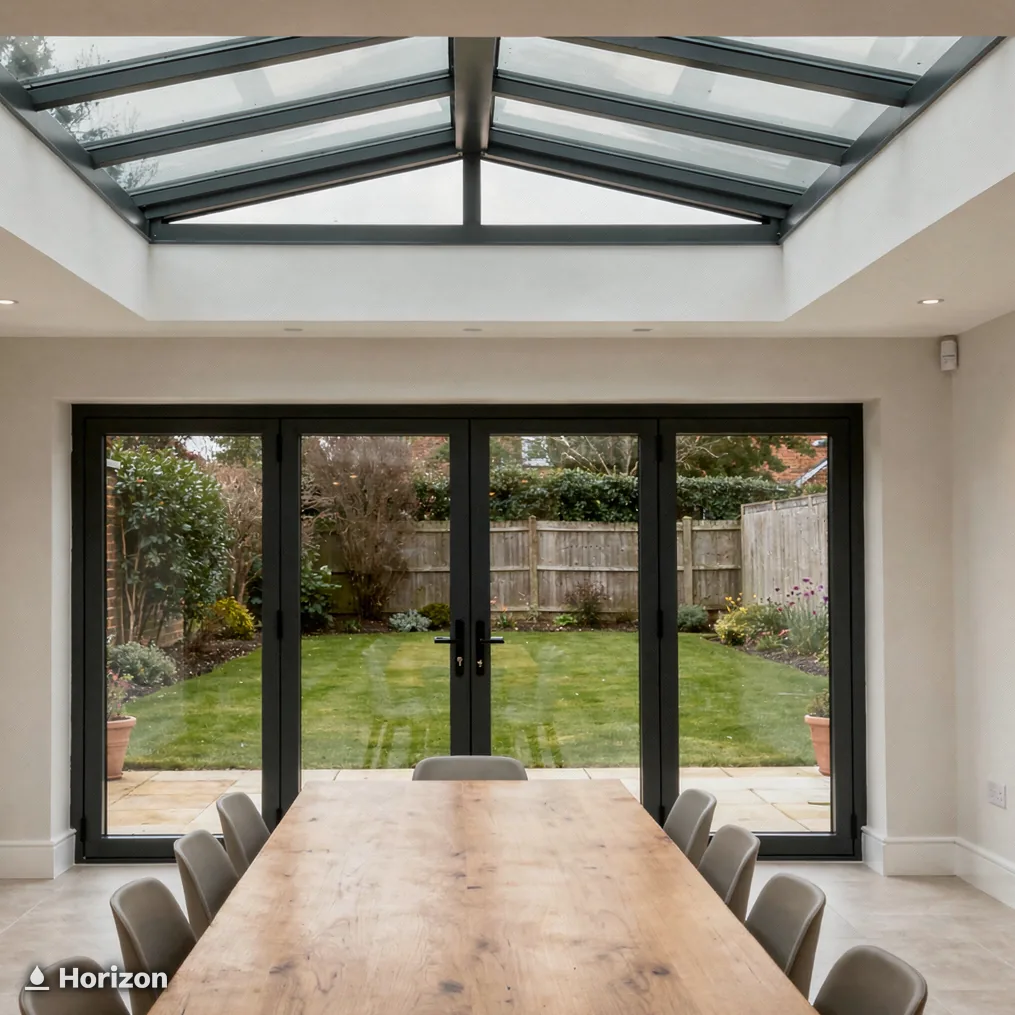
Rooflights and skylights fitted in Crynant
A long village on the Dulais valley floor and the lower slopes of Hirfynydd: rooflights for roofs at several heights, all under the same sky.
Free survey / fixed written quote / Building Control notification handled / 10-year workmanship guarantee
Valley rain and the Crynant roofline
Crynant lies along a narrow valley floor and up the lower slopes of Hirfynydd, with the River Dulais running through the village. A street on the valley floor and a street on the slope can sit under the same shower and still ask different things of a rooflight, because the roofs face different ways and stand at different heights.
On a pitched roof, the water has to be kept out by the flashing kit around a roof window. It tucks beneath the slates or tiles above the glass and lies over those below it, so rain that wind pushes up the slope meets the overlap before it meets the opening. A kit that has been lapped carelessly gives wind-driven rain a way in, which is why the covering around the window gets as much attention as the window.
Where a utility room or kitchen at the back has a flat roof, the trouble is the opposite. Water on it moves slowly, and a kerb that sits level can hold a puddle against the frame. Rainclear advises a minimum 5° slope on the kerb of a flat glass rooflight to keep pooling down, and the same thinking applies to any rooflight that sits out of plane with the roof.
Indoors, the damp comes from the household. A kettle, a pan of potatoes and a rack of school shirts put water into the air, and it settles on the coldest surface in reach. Glazing that meets Approved Document L (Wales) helps keep the inner pane from running cold, and an extractor that is left on long enough does the rest.
Last comes the glass itself. A rooflight on a roof that nobody climbs gathers a film of spray and grime, so where it goes should allow it to be cleaned from inside. A coating can share the wiping: Pilkington sells its Activ range for roof glazing among other uses, and the coating loosens dirt in daylight so that the next shower can rinse it away.
| House type | Roof | Where the light can go |
|---|---|---|
| Old cottage terraces | slate or tile, steep | roof window on the rear slope |
| Later semis | tile, pitched | roof window or sun tunnel |
| Back extensions | flat | kerb-mounted rooflight, or a lantern |
| Loft rooms | pitched | roof window with a pivot or hinge |
- WELSH NAME:
- Y Creunant
- VALLEY:
- Dulais
- FIRST COLLIERY:
- Maes Mawr, 1874
Coal, cottages and the Square
Until coal was found in the 19th century, Crynant was a rural, agricultural community of scattered farms. It first appeared on maps as Capel Creunant, and Y Creunant is its Welsh name today. The first colliery, Maes Mawr, opened in 1874. Men looking for work in the mines began to arrive, and the village started taking shape around the Square.
Brynawel Pen Pentre, a terrace of old cottages, was the first street built in the village, and the old Blaenant Colliery site lies at its top end. Pen Pentre, the Square, Maes Mawr and Station Road all date from the 19th century. Station Road takes its name from the Neath and Brecon Railway, which was built in the mid-1860s and ran through the village. On a site where a colliery closed in 1968, the Cefn Coed Colliery Museum now stands.
Swansea is 14.72 road miles away and Crynant sits north-east of it, comfortably inside the area we serve. Close neighbours on the map include Resolven and Seven Sisters.
None of that tells you what is on your roof. As a general rule, terraces from the 19th century are pitched, covered in slate or tile, and have narrow rear slopes. That suits one roof window, lighting a rear bedroom or a bathroom, better than a large opening. Semis from later decades usually give the back slope more width.
A flat-roofed extension at the back changes the picture, because the choice there is between a flat rooflight and a lantern. Your own house may follow none of these patterns, which is why the first visit is a look at the roof itself.
Hirfynydd's lower slopes mean roofs at different heights and facing different ways. That is a reason to choose the flashing and the opening mechanism roof by roof, and the survey is where it gets decided.
Dates in the village record
- 1874Maes Mawr Colliery opens
- mid-1860sNeath and Brecon Railway built
- 1968a colliery closes; museum on the site
- PLANNING:
- Neath Port Talbot Council
- AONB:
- Gower: not inside
- BUILDING CONTROL:
- your choice of body
Who decides what, from the kerb to the council
For a Crynant address, planning sits with Neath Port Talbot Council. The village is nowhere near Gower's protected landscape, so that layer of control is absent. For an ordinary house, whether a new rooflight needs a planning application depends on the house itself and on any conditions attached to it. Our planning guide for skylights in Wales lays the tests out in one place.
Flats and maisonettes start from a weaker position, because householder rights do not reach them. Houses can lose their rights too: a council may make an Article 4 direction, and the original planning permission for a house may carry a condition that removes them. On a listed house, a rooflight that touches its special character calls for listed building consent, and Cadw, the Welsh Government's historic environment service, explains the process.
If you are on the fence, ask the planning team at the council. A Lawful Development Certificate settles the point in writing, and a buyer's solicitor will be glad of it when the house is sold.
Building Regulations are a separate matter from planning. A brand-new roof opening will generally need approval: making room for it usually means changing the roof's structure, and the roof then carries the unit's weight. You pick the body that checks it: the council's building control team, or a registered building control approver. If the job is one that has to be notified, that notification is ours to make.
Replacement is a different case. Swapping an existing roof window for a new one is still building work, but a repair is not. The new roof window should reach 1.4 W/m²K or Window Energy Rating Band B under Approved Document L (Wales), and a new rooflight on a kerb should reach 2.2 W/m²K.
Paperwork in the order it happens
- House or flat? Flats and maisonettes sit outside the householder rules.
- Any restriction? A council direction or a planning condition can take the rights away, and a listed house needs consent of its own.
- Building control Council team or registered approver; we make the notification where one is needed.
- BEDROOM:
- roof window, rain sensor
- LANDING:
- tunnel and dome
- BACK KITCHEN:
- flat rooflight or lantern
A loft bedroom in a gale, and four other rooms
A loft bedroom is where an open roof window faces its hardest test. Leave it on the latch while you are out and a squall can find the gap. On the solar and electric VELUX range, the window carries its own rain sensor, which closes it once rain starts, so the room stays aired on dry days and shut on wet ones. The choices are set out on our electric opening rooflights page.
The same bedroom can take a roof window in the slope, hinged at the top so the sash swings out over your head, or pivoted at the middle so the outer glass turns inward for cleaning. A loft room may also need a window that can serve as a way out in a fire, and that sits with the Building Regulations, not with planning.
Many a landing has no outside wall and no loft space spare. There, a sun tunnel takes the light that reaches a little dome on the roof and sends it down a mirrored tube that ends in a diffuser on the ceiling. In drizzle it gives a soft, even light, and the dome is small enough for rain to slide straight off.
At the back, a kitchen or utility extension usually has a flat roof. Here a rooflight for a flat roof sits on a kerb that needs a fall in it, and a roof lantern sheds the rain down its pitched glass onto the roof around it. Approved Document L defines a rooflight as a glazed unit set on a kerb or upstand. Where the lantern belongs to an extension still on the drawing board, we check the planning position with Neath Port Talbot Council.
The bathroom is the demanding one. Shower steam heads for the glass first, so a roof window over a bath or shower wants an extractor or a vent, plus glazing that keeps its inner face warm. Rain noise reduction is on the list of VELUX glazing choices, and a bedroom under the roof is the place to ask about it.
An old rooflight that has misted between its panes has usually lost the seal on its glazed unit, and we fit new units as well as replace misted rooflights. Whatever the room, a free survey comes first, after which you have a fixed written quote in hand. A 10-year workmanship guarantee, in writing, follows the finished work. Call 01792 929062 or book the survey online.
Terms you will hear
- Roof window
- a window installed in the same orientation as, and in plane with, the surrounding roof
- Rooflight
- a glazed unit installed out of plane with the roof surface, on a kerb or upstand; also called a skylight
- Flashing kit
- the set of pieces that seals a roof window into the slates or tiles around it
Crynant roofs, questions answered
A Crynant terrace has a narrow back slope. Will a roof window fit?
A single roof window usually suits a narrow slope better than a wide one. VELUX lists each size with its width and height, and the size code on a window's type sign tells you both. The survey measures the slope and the rafters and settles which size the roof can take.
Who handles Building Regulations for a new rooflight on a Crynant house?
You choose: Neath Port Talbot Council's building control team, or a registered building control approver. If the work has to be notified, we make that notification to whichever you have picked.
What happens to an old flat rooflight that holds a puddle after rain?
Look at the kerb first, and at the fall of the roof around it. A flat glass rooflight is normally installed with some fall so rain can leave, and Rainclear's own guide suggests at least 5° on the kerb. Fresh glass on a kerb that still sits level can leave the puddle in the same corner.
Could a rooflight go in above a landing with a loft over it?
That spot is exactly what a sun tunnel is for. It passes through the roof space in a tube, so the loft can stay a loft, and the diffuser in the ceiling gives light to the landing below. The survey checks the route between roof and ceiling.
Why do the panes of an old roof window have a cloudy film between them?
It normally means the sealed glazing unit has failed and let moisture in. A cloudy film between the panes cannot be wiped off, because the damp is inside the unit, and the cure is a new unit or a new window. We replace misted units.
What comes before you put a figure on the work?
The visit comes first and costs nothing, and after it you receive a fixed written quote. At handover, the 10-year workmanship guarantee is put in writing. To get the visit booked, fill in the form.
Nearby towns we also cover
Bulletin Crynant
Book your free survey
- Survey:
- before we price
- Quote:
- fixed, in writing
- Guarantee:
- 10 years on our workmanship, in writing
No obligation. Building Control notification handled where the work is notifiable.