- FROM SWANSEA:
- road distance 6.75 mi
- COUNCIL:
- City and County of Swansea
- HOMES:
- mixed roof shapes
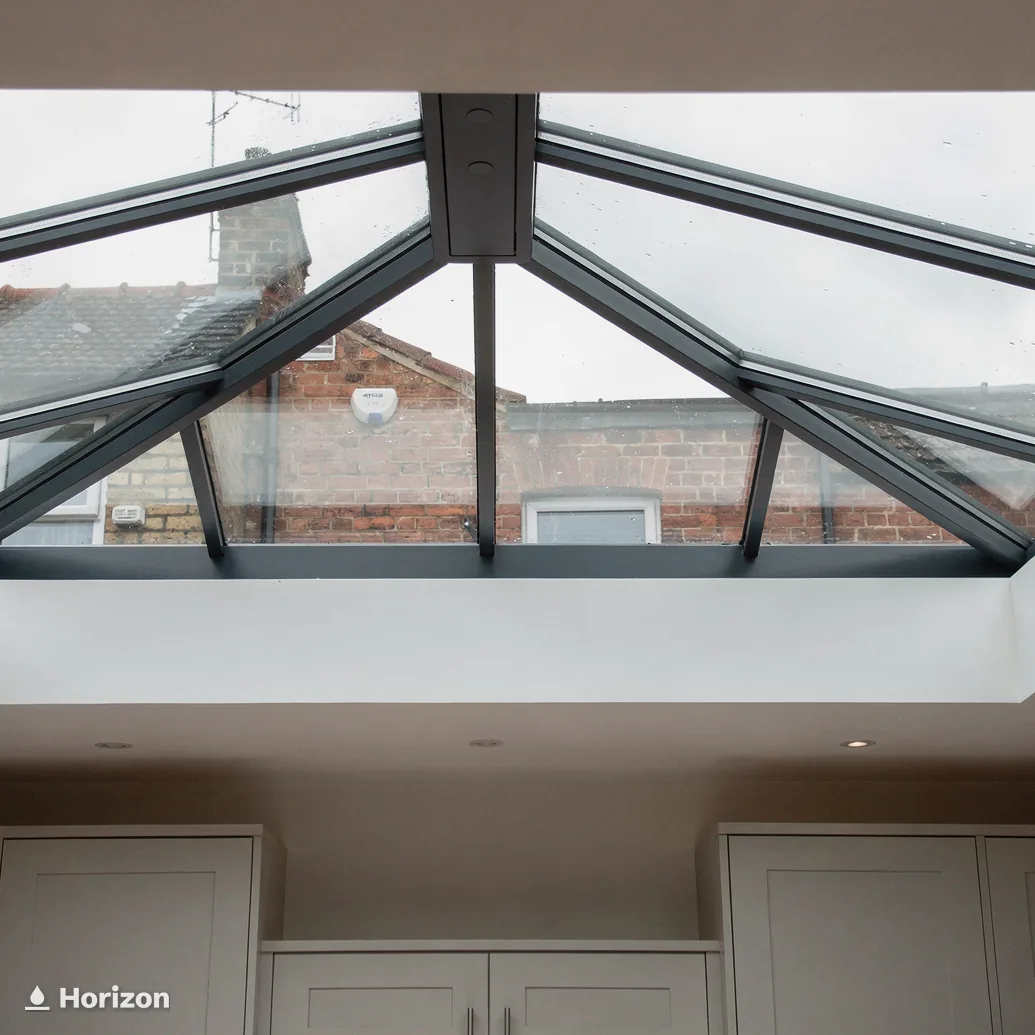
Skylights and rooflights in Gorseinon
Gorseinon, Einon's marsh near the Loughor estuary: a name that tells you how to treat water on a roof.
Free survey / fixed written quote / Building Control notification handled / 10-year workmanship guarantee
A marsh name, and water that must not stay
Gorseinon means Einon's marsh, from the Welsh cors, a marsh, and the personal name Einon. The short form in Welsh is Y Gors, simply the marsh. Whoever chose that name was describing ground where water lingers, and the town sits near the Loughor estuary. A roof is a small piece of ground too, and the worst thing it can do with water is hold on to it.
Flat roofs are the ones that hold on. Rain stays put wherever the surface dips, and a rooflight sitting in a dip gathers a puddle around its kerb. A fall in the roof surface towards an outlet, with the outlet kept clear, is what lets a rooflight stay dry. Manufacturers typically recommend a fall for flat rooflights, and Rainclear's guide names 5° of slope on the kerb as its floor.
Pitched roofs need no such coaxing, because gravity does the work. What they need is careful finishing around any opening, since driven rain gets under anything that is short. Around a roof window, the flashing must be laid in sequence with the tiles or slates, upper courses over it and lower courses under it, with the frame fixed square.
Sound is worth a thought for a bedroom. Rain on glass reads louder than rain on tile, and VELUX offers rain noise reduction among its glazing variants on some windows. It is worth raising at survey.
Indoors, it is air that carries the water. A kitchen with the hob on and a bathroom with the shower running put moisture into the room, and a window pane near the ceiling is the coldest place it can land. Glass that meets Approved Document L (Wales) keeps the inner surface milder.
Clean glass is the last item. A pitched-slope window out of arm's reach collects a film of dirt. For that, a dirt-repellent coating is among the glazing options VELUX lists for some of its windows.
| House type | Roof | Suggested glazing |
|---|---|---|
| Rows of terraced houses | pitched, slate | single roof window at the back |
| Semi-detached houses | pitched, tiled | two roof windows, or one plus a tunnel light |
| Kitchen-diner extensions | flat, on a slight fall | skylight or a lantern |
| Garage conversions | flat or low pitch | kerb rooflight, or a dome |
- STATUS:
- town, in Swansea
- WELSH NAME:
- Y Gors
- POPULATION 2011:
- 8,693 (town council area)
Coal, tinplate and a town that grew on them
Gorseinon is a town within the City and County of Swansea, near the Loughor estuary. It was a small village until the late 19th century, when it grew around coal mining and tinplate. In 1840 the population was barely 250 people. At the 2011 census the Gorseinon town council area counted 8,693.
The spelling has moved over time. A standard form of the name, Corseinion, appears in an appeal by Y Cymro Coch to his fellow tinplate workers in 1882, a reminder that the town's name and its industry were written about together from early on.
Coal went out by rail and water. It travelled on a narrow-gauge railway line to Loughor, where it was loaded onto barges bound for export from Llanelli. In 1860 the London and North Western Railway wanted to take its line on towards Swansea, and William Lewis, a young industrialist, sold the company the land. A station followed in 1870, and it became known as Gorseinon Station.
In 1886 the Grovesend Tin Works was built, and the Lewis family built many houses nearby to house the workers. As industry grew, so did the housing and the streets, with Mill Street, Gorseinon Terrace, Eynon Street and High Street among them.
That history explains the streets. It does not describe every house on them, and roof shapes in a town that grew in stages are as mixed as the stages. A terrace of workers' houses is one roof, a postwar semi another, a new extension a third. The roof we are standing under is where we start.
From Swansea the town is 6.75 road miles away, to the north-west. Our work also takes in Gowerton and Loughor.
- 1840population barely 250
- 1886Grovesend Tin Works built
- 1870Gorseinon Station built
- PLANNING:
- Swansea Council
- LISTED HOUSES:
- consent via the council
- AONB:
- none applies
Swansea Council, and what needs a decision
A Gorseinon rooflight application goes to the City and County of Swansea Council. Gorseinon sits beyond the Gower AONB, which means no AONB rule applies to it. Whether a rooflight on your house needs an application at all turns on the roof and the house, and the conditions are set out in the Wales skylight planning guide.
The Welsh Government publishes its householder guidance for anyone weighing up a roof job, and its page on planning permission for roofs is a good place to read the basics.
Not every house starts from the same position. Rooflights are outside householder permitted development for flats and maisonettes. A house may also have lost its permitted development rights, whether to an Article 4 direction or to a clause in the permission it was built under. For a listed house, a rooflight that touches the building's special character needs listed building consent, applied for through the council. Cadw sets out how listed building consent works.
Take a lantern going onto flat roofing that is already there. It rises well above the roof on an upstand, which normally takes it beyond what permitted development allows, so planning permission is the usual route. The council gets asked at survey stage, and we pass on its answer.
When the position is unclear, a short call to the planning team is worth making. A Lawful Development Certificate turns the answer into a formal record.
Building Regulations are a different question. They ask whether the work is built to standard rather than whether it may go ahead. A brand new rooflight usually means altering the roof structure and supporting the unit, which is why approval will generally be needed. Where the work is notifiable, we handle the Building Regulations notification with local authority building control or a registered building control approver. The glass is covered too: Approved Document L (Wales) says a new rooflight should reach 2.2 W/m²K, and that figure is based on the whole developed surface area of the unit, not only the opening in the roof.
- EXTENSION:
- glass on a kerb, or lantern
- SHALLOW ROOF:
- dome, 0° to 15°
- HALLWAY:
- tube light
Flat roofs, shallow pitches and dim hallways
The terms matter when you read a quote or a data sheet. Approved Document L (Wales) defines a rooflight as a glazed unit installed on a kerb or upstand, out of plane with the roof, and it defines a roof window as one in the same plane as the slope. The 2.2 and 1.4 figures belong to those two definitions, and they are not interchangeable between them.
Think first about the flat-roofed extension, because it is the place where the marsh logic applies. A flat roof rooflight stands on a kerb above the roof, and VELUX offers flat glass rooflights in double or triple glazing, described by the company as giving better energy efficiency and sound reduction. The glass is only half the job. The roof beneath it needs a fall that drains, or the puddle comes back.
VELUX intends its flat roof dome for roofs of 0° to 15°, which suits a garage conversion with a barely tilted roof. For something grander, a roof lantern sheds water down its glazing and over the upstand. A lantern designed into a rear build-out reaches the council before it reaches an order form.
On a terraced house, the back slope is the place for glass. Up in a loft, a roof window that opens lets air through, and a room above the stairs gets daylight from it as well. For an old window being replaced, Approved Document L (Wales) says a new or replacement roof window should reach 1.4 W/m²K or Window Energy Rating Band B.
Extensions raise a sum of their own. When a window or door opening is enlarged or a new one made, Approved Document L (Wales) says the combined area of windows and doors should not exceed 25 per cent of the home's floor area. A rooflight is not named in that total in the 2022 edition, and the new Welsh edition due on 4 March 2027 counts roof windows and rooflights in the sum too, while allowing extra glass where the home's energy efficiency is improved to make up for it.
The loft also needs air. Every habitable room needs a way of airing rapidly, and a window that hinges or pivots open to 30° or more can supply it, as long as the opening is a twentieth of the floor area. Windows opening less than 15° do not count.
A hallway with no window wall is the dim spot in many a house. A sun tunnel takes light from a small roof dome down a mirrored tube into a ceiling diffuser. Rain leaves a dome that size quickly.
A fogged unit usually means a failed seal. Misted rooflights are on our replacement list alongside new installs. The sequence is a free survey, then a fixed written quote, then a written 10-year workmanship guarantee on completion. Ring us on 01792 929062 or request a survey here.
Pitched slope
- water runs off by gravity
- risk sits at the flashing
- roof window lies in line with the slope
Flat roof
- water waits unless there is a fall
- risk sits at the kerb and outlet
- rooflight stands up on a kerb
From Gorseinon homeowners
Why does water sit around my kitchen extension rooflight?
Usually the roof surface dips towards the kerb, or the outlet has blocked, and the water has nowhere to go. New glass on the same roof leaves the puddle in place. Manufacturers typically recommend a fall, which is why the survey looks at the roof before the glass.
Is a rooflight in Gorseinon affected by the AONB rules?
No, the town is not inside the Gower AONB. Planning for the house goes through the City and County of Swansea Council, and the conditions are in the planning guide.
How big a fall does a flat rooflight need?
Rainclear's installation guide gives 5° on the kerb as the minimum to keep water from pooling, and glass makers typically recommend a roof with some fall, so that the water can leave. A roof that is almost flat can still take glass, and the pitch is measured before a product is picked.
Which window opens enough to count as airing a loft room?
Approved Document F (Wales) treats a hinged or pivot window opening 30° or more as purge ventilation if its opening area is a twentieth of the floor area. A sash that opens only part way, between 15° and 30°, needs an opening area of 1/10 of the floor area, and anything under 15° is ignored.
Does your Swansea area reach as far as Gorseinon?
Yes. The town sits 6.75 miles up the road from Swansea, in the north-west. Our work reaches 30 road miles out, across Carmarthenshire, Neath Port Talbot and Bridgend.
What happens first on a job?
A free survey, before any figure is named. Once the survey is done, a fixed written quote arrives. The completed job then carries a written 10-year workmanship guarantee. To start, fill in the form.
Nearby towns we also cover
Bulletin Gorseinon
Book your free survey
- Survey:
- before we price
- Quote:
- fixed, in writing
- Guarantee:
- 10 years on our workmanship, in writing
No obligation. Building Control notification handled where the work is notifiable.