- FROM SWANSEA:
- north-east, 20.32 mi by road
- PLANNING:
- National Park Authority
- HOMES:
- general types, see table
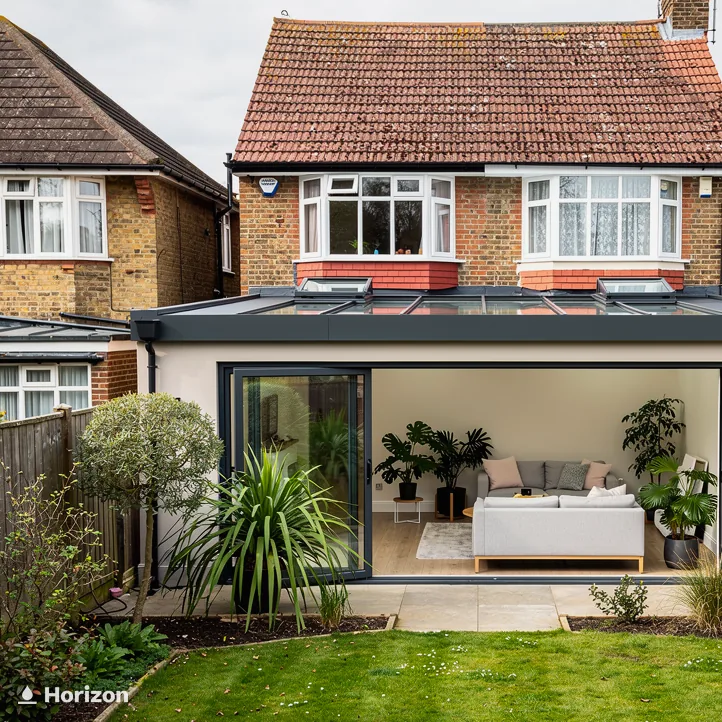
Rooflights and skylights fitted in Pontneddfechan
Pontneddfechan, where the Mellte meets the Nedd Fechan: waterfall country inside Bannau Brycheiniog, and a roof that sees plenty of rain.
Free survey / fixed written quote / Building Control notification handled / 10-year workmanship guarantee
Falling water, upper Neath valley
Pontneddfechan stands where two rivers meet and opens onto a string of waterfalls in the upper Neath valley. Water is the landscape here, and roofs share in it. A rooflight in a village like this works under a sky that delivers rain often enough that nobody stops noticing, so the glass should behave as well on a ninth wet day as on the first.
On a pitched roof, behaviour comes down to the joint between window and covering. A roof window needs a flashing kit that tucks under the slates or tiles above and laps over those below. When gusts push water up the slope, overlapping layers send it back down. If a layer is short, wind finds it.
A flat roof asks for a different kind of care. Rain on a level surface slows down, and a rooflight on a kerb that sits in a shallow dip will hold a pool against its frame. Rainclear says a kerb slope of at least 5° keeps pooling to a minimum, so the slope built into a flat roof counts for as much as the glass set into it.
Inside the room the issue is moisture from living. Kettles, showers and drying clothes load the air, and a cold inner pane collects it as water. Glass made to meet Approved Document L (Wales) keeps its inner face warmer, and a fan or opening sash carries damp air out.
Rain noise is the last consideration. A bedroom beneath a roof window hears the weather more than one beneath a ceiling and a loft, and some VELUX windows can be had with glazing designed to cut the sound of rain. A rooflight over a kitchen extension carries the sound into a room where talk and cooking cover it. A bedroom is where it deserves a second thought. Water-heavy weather in the valley makes that thought worth having before the order, not after the first storm.
| Type of house | Roof form | Glass to consider |
|---|---|---|
| Stone-built cottages and terraces | pitched, small slopes | one roof window, planned with the Park Authority |
| Bungalows | low pitch | slope windows, or a tunnel for a dim hall |
| Family houses | tiled pitch | loft-room window, one or two |
| Back extensions | flat | rooflight or lantern, after the planning answer |
- WELSH NAME:
- bridge over the Little Neath
- RIVERS:
- Mellte, Nedd Fechan
- STATUS:
- village
Little Neath, falls and firebrick
The name means the bridge over the Little Neath, and the village stands at the confluence of the rivers Mellte and Nedd Fechan. It gives access to a series of waterfalls that decorate the upper Neath valley, and a network of footpaths runs from it. Stone sleepers from a silica mine tramway can still be seen in the path of the waterfall walk.
Industry came early. In 1822 the Quaker entrepreneur William Weston Young took a 21-year lease from the Marquess of Bute to mine silica rock around Craig-y-Ddinas. When the lease ran out in 1843, the firebrick makers Riddles, Young and Co. moved to new premises on The Green in Neath.
Gunpowder followed. In 1857 the Vale of Neath Powder Co. built a gunpowder manufactory, with a licence to put up its mills along two miles that took in the Upper and Lower Cilliepste Falls. The buildings were linked by a horse-drawn tramway, and the horses wore copper horseshoes to reduce the chance of sparks. An inclined tramway from a siding on the Vale of Neath Railway near Pen-cae-drain brought in sulphur and saltpetre, the other ingredients.
From Swansea the village lies 20.32 miles by road to the north-east, inside our 30-mile area. Neighbouring places with their own pages here are Glynneath, Cwmgwrach and Banwen.
The industrial past has left tramway stones and a footpath network, and it left a village used to working in the weather, with rivers for neighbours. Houses here have long been judged by how they stand up to a wet season, and a rooflight is judged the same way. Few of those old industrial buildings tell us anything about the houses of the village today. For a rooflight, the useful fact is simpler: it is a place of stone, slope and weather, and any new opening in a roof starts with the planning rules that apply to a National Park.
Dates along the valley
- 1822silica mining lease begins
- 1843firebrick makers move to Neath
- 1857gunpowder manufactory built
- PARK:
- Bannau Brycheiniog
- PLANNING:
- Park Authority
- ROOFLIGHTS:
- need permission
Inside the National Park
Pontneddfechan lies inside Bannau Brycheiniog National Park, and the National Park Authority administers planning there in place of a county council. A new rooflight in the roof slope of a house in the Park needs planning permission, because National Park land is among the places where the usual freedom to add a rooflight does not apply. The reasoning and the wider rules are in our Welsh planning guide.
That makes the Park Authority the first call for any project. Ask about the roof slope you have in mind, the size of the opening and the look of the glass, and expect the answer to shape the product. A slim, flush unit is the kind of detail an authority responsible for a protected landscape pays attention to. Our conservation rooflights are made to sit low in an older roof.
Replacing an existing unit is its own subject. A like-for-like swap of a worn roof window still counts as building work, and the glass options and sizes are matched to the opening already there.
Cadw publishes the record of every listed building in Cof Cymru, so a house can be looked up by address before a design is drawn. Listed buildings follow separate rules. If a house is listed, a rooflight that affects its character needs listed building consent, applied for through the local planning authority with Cadw consulted. In this village that authority is the Park Authority.
A rooflight application from the Park is also a chance to ask about materials. Authorities responsible for protected landscapes look at how a change appears from the street and from the hillside, so a frame colour and a flush profile can matter more than they would elsewhere. Building control runs alongside planning. In Wales, local authority building control or a registered building control approver checks the roof opening, the structure around it and the energy performance of the glass, and where the work is notifiable we handle the Building Control notification.
- SLOPE:
- glazing set in the slope
- FLAT ROOF:
- kerb unit
- LIMITS:
- 1.4 and 2.2 W/m²K
Choosing glass for a wet valley roof
Start with the roof. A pitched slope takes a roof window, which sits in line with the slates or tiles, and in Wales a new or replacement unit should reach 1.4 W/m²K or Window Energy Rating Band B. A flat roof takes a rooflight on a kerb, which should reach 2.2 W/m²K. Read about the roof window and flat roof rooflight ranges before the survey.
Dim rooms can also gain from a loft conversion. A loft room under a pitched roof does well with roof windows side by side, since two units give an even spread of light and a wider view. Top-hung sashes open clear of the head, while centre-pivot ones swing round so the outer pane can be cleaned from inside. The first suits a room with a low sill, and the second suits a window that is out of reach. Both shed rain the same way once they are flashed correctly into the slope, and that joint deserves most of the attention at fitting time, whatever the glass looks like.
A roof lantern is a larger undertaking. Brett Martin asks for the upstand beneath its lantern to be at least 150 mm tall, and prefers it built level. A lantern stands tall above its roof, so a lantern placed on an existing flat roof would normally need a planning application first, and in the Park it is the Authority that receives it. See roof lanterns.
A bedroom loft under a long, wet winter shows why the opening matters. An open roof window clears stale air, and the electric roof windows from VELUX come with a rain sensor built in, to shut the sash without anyone at home. That suits a household that leaves a window ajar and goes out for the day.
Where there is no roof void to spare, a sun tunnel brings light into a dark hall or landing through a short tube from a small roof dome. Water slides off a dome that size, and the run to the ceiling is easiest in a single-storey roof.
A bathroom or kitchen needs the most from its glass, because steam climbs to it every day. A fan left running once the shower is off, together with a warm inner pane, takes most of the strain. A bedroom needs quiet and fresh air more than anything, and a hall needs only light. Matching the product to that need is the point of the survey.
Wherever the glass goes, it deserves a place from which it can be cleaned, or a coating that cleans itself. Pilkington Activ is sold for rooflights as well as windows, and its surface loosens dirt in daylight and lets rain wash it off.
| Room | Glass | Worth checking |
|---|---|---|
| Bathroom | slope window | steam on the inner pane |
| Loft bedroom | slope window, maybe electric | rain through an open sash |
| Kitchen extension | kerb unit | a fall in the roof |
| Dim hall | tunnel | a clear run to the ceiling |
Pitched slope
- window lies in the slope
- flashing laps tile over tile
- opens for air if wanted
Flat roof
- glass on a raised kerb
- a fall carries the rain away
- fixed or opening
Asked in Pontneddfechan
Who deals with a rooflight application in Pontneddfechan?
The Bannau Brycheiniog National Park Authority. The village lies inside the Park, and the Authority handles planning there. A rooflight added to the roof slope of a house needs planning permission from it.
Why does the Park matter to a roof window?
National Park land is protected in the Welsh rules, and that removes the freedom to add a rooflight to a roof slope without an application. The glass you choose and where it sits are things the Authority can comment on.
What stops a flat rooflight from holding a puddle?
The fall in the roof around it. Rainclear advises a minimum slope of 5° on the kerb, and glass manufacturers generally ask for a fall in the roof as well.
Can a sun tunnel work in a dim hall of a stone cottage?
It can, where the roof space allows a clear run between roof and ceiling. The dome gathers light on the roof and the tube sends it to a ceiling diffuser. The survey checks the run.
Is Pontneddfechan within your area?
It is, at 20.32 miles by road from Swansea heading north-east. Glynneath is part of the same patch.
What do I get before any figure is agreed?
Nothing is priced from a photograph. A free survey opens the process, a fixed written quote comes next, and our workmanship guarantee, ten years long, is put on paper for the finished job. The Park Authority question is worth settling alongside the survey, so mention it when you send the enquiry form.
Nearby towns we also cover
Bulletin Pontneddfechan
Book your free survey
- Survey:
- before we price
- Quote:
- fixed, in writing
- Guarantee:
- 10 years on our workmanship, in writing
No obligation. Building Control notification handled where the work is notifiable.