- FROM SWANSEA:
- 9.17 mi by road
- COUNCIL:
- Swansea Council
- HOMES:
- pitched and flat roofs
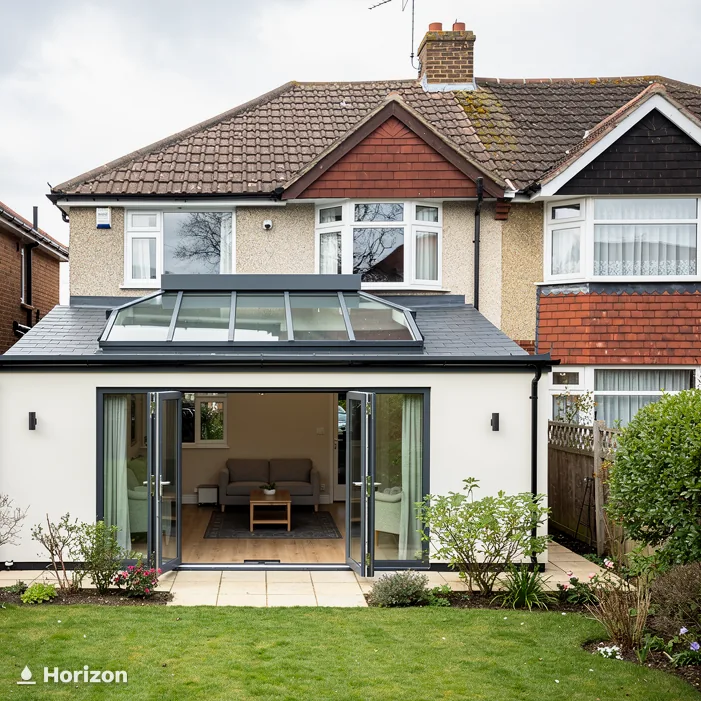
Rooflights and skylights fitted in Penclawdd
Penclawdd on the Loughor estuary: roofs with a wide view of the sky, and rooflights picked to cope with what comes out of it.
Free survey / fixed written quote / Building Control notification handled / 10-year workmanship guarantee
A roof with a view of the estuary, and the wind that comes with it
Part of Penclawdd is perched high, with panoramic views over the Loughor estuary and the Gower countryside around it, while the main part of the village runs along the water's edge. A roof with that much view has little between it and the sky, and a rooflight on it spends wet days in whatever wind comes along.
Wind-driven rain is a pitched-roof matter first of all. It travels up a slope and tries every overlap, so a roof window should have its flashing tucked under the covering above and laid over the covering below. There is a VELUX low-pitch roof window designed for slopes between 10° and 20°, which is worth knowing before a gentle slope is handed a standard unit.
Opening windows add a question of their own. A sash left ajar for air on a dry morning is exposed when a squall arrives at noon. The electric and solar VELUX models carry their own rain detector and close the sash unaided, which covers the room even when the house is empty.
Inside, moisture follows the usual path: the shower, the kettle and the washing add it, and the coldest pane collects it. Choose glazing that reaches the Welsh limits, and give the room a way to vent.
Clean glass is a simpler matter. Site the unit where a pole can reach it, or ask about a self-cleaning coating. Activ, from Pilkington, is a coating with roof glazing on its list of uses, and it uses daylight to loosen dirt so that the next shower washes it away. A rooflight that stays clear lets in more of what is left of a grey day, and a flat rooflight that is wiped now and then is easy to see through when you check the fall of the kerb after rain.
| Roof | Glass for it | Ask before choosing |
|---|---|---|
| Steep or shallow pitched slope | roof window sized to the pitch | what range of pitch the unit is made for |
| Flat extension roof | kerb-mounted rooflight, or a lantern | which way the water drains |
| Loft room | roof window, manual or electric | who closes it when it rains |
| Older house with a protected look | conservation rooflight | what the council will consent to |
- SETTING:
- Loughor estuary
- KNOWN FOR:
- cockles, copper, coal
- WELSH NAME:
- Pen-clawdd
A Gower village built on copper, coal and cockles
Penclawdd is one of the larger villages on the Gower peninsula, and its Welsh name is Pen-clawdd. It is most famous for its cockle industry, which goes back to Roman times, and the estuary on its doorstep is thriving with wildlife.
Heavy industry came too. The village was renowned for coal mining and for its extensive tinplate, copper and brass works, run by the Cheadle Copper Company. Around 1800, John Vivian of Truro in Cornwall became managing partner in the copper works at Penclawdd and Loughor, then owned by the Cheadle Brasswire Company of Staffordshire. The Penclawdd Canal joined the Burry River at Aberkeddy, and a busy railway station once served the place; the original platform still stands today.
Life had its own scale. At one time the village had a forge, twenty grocers, three butchers, three drapers, four fish and chip shops, eleven pubs and a cinema, along with three chapels and a church. Those three chapels and the church are still standing. The derelict Hermon Chapel, built in 1807, was once used to help ships find their way up the estuary.
The run out from Swansea is 9.17 miles heading west, short enough to sit well within our patch. Crofty and Three Crosses are neighbours, and we fit in both.
Look up from the lanes today and the roofs tell their own story of that mix. A village that grew in stages can have roofs of different ages and shapes, and the right rooflight for each depends on the slope, the room under it and the weather it faces. That is general to villages that grew this way. Your own house may be an exception, and a survey is how we find out.
- 1807Hermon Chapel built
- c.1800John Vivian joins the copper works
- 9.17road miles, Swansea to Penclawdd
- PLANNING:
- City and County of Swansea Council
- CONSERVATION:
- Penclawdd area mapped
- AONB:
- village centre outside
The Penclawdd conservation area and the AONB boundary
City and County of Swansea Council handles planning for Penclawdd. On the Welsh Government's map of conservation areas, one is named Penclawdd, and it covers the point we use for the middle of the village. In Wales, putting a rooflight into the roof slope of a house inside a conservation area needs planning permission. The map does not follow property lines, so the exact address decides, and the council's conservation areas page has the detail if you want to look up your own street.
The Gower AONB is the other designation to know. Boundary data puts the middle of Penclawdd outside it, but a rooflight on a house inside the AONB needs planning permission too, so an address near the edge of the village is worth checking on the council's AONB page.
Elsewhere, whether a house can add a rooflight without an application depends on the conditions in the planning guide. For flats and maisonettes there are no householder permitted development rights at all. Elsewhere a council can take rights away through an Article 4 direction, or by a condition tied to a house's first permission.
A listed house needs listed building consent for work that would affect its character. Cadw says that replacing traditional windows with uPVC on a listed building will not normally be acceptable, and its consent guidance explains what the application covers.
Building Regulations follow their own track, apart from planning. A new opening will generally need approval from a building control body, and a like-for-like replacement is still building work. We take care of the notification when it applies, going through local authority building control or a registered building control approver.
Anyone who wants certainty before work begins can ask Swansea's planners, and the paper called a Lawful Development Certificate records their reply in writing. It is a useful paper to hold when you sell, and it saves guessing about a boundary line.
- PITCHED:
- roof window, rain sensor option
- FLAT:
- flat kerb-mounted rooflight, or a lantern
- OLDER HOMES:
- conservation rooflight
Glass for sloping, flat and older roofs here
Windows set in a pitched slope are the everyday job. A roof window lies in line with the roof, and in Wales a new or replacement one should reach 1.4 W/m²K or Window Energy Rating Band B. If the room is a bedroom or bathroom you want the sash to open. See electric opening rooflights for the motor and sensor options, and VELUX windows for the brand's range.
Over a flat extension you pick between a low flat rooflight and a taller lantern. Manufacturers typically want a fall so that water runs off a flat rooflight. VELUX says its flat glass rooflights come in double or triple glazing. Where the extension is new, a lantern on it is a matter for the council, and on an existing flat roof it is normally a planning matter, given how high it stands. For the flat rooflight, the Welsh figure is 2.2 W/m²K.
Older homes ask for more care. A conservation rooflight is built with older roofs in mind, and inside the Penclawdd conservation area it is the type to raise with the council. The VELUX conservation roof window has a laminated inner pane and a toughened outer pane. Approved Document L even provides a fallback for a replacement roof window on a home of architectural or historic interest that cannot reach 1.4: a centre-pane value of 1.2 W/m²K, or low-e secondary glazing. Rooflights get no such fallback.
Inside a house of any age, a landing with no outside wall can be darker than the rest. A sun tunnel reaches it where a window cannot, using a dome that sheds rain easily and a tube that needs no structure beyond the loft space above. It suits the passage at the top of the stairs, the bathroom with no outside wall and the hall that gets little sun.
A bathroom or kitchen window carries one more point. Swapping a window should leave the house breathing no more poorly than it did, and trickle vents are part of that picture. A room that depends on natural ventilation needs somewhere for damp air to go, and in a steamy room that matters for the glass as much as for the plaster. We look at it during the survey.
If an old unit has failed, swapping it is a job we do. Misted rooflights explains the signs.
Surveys are free and carried out before any figure is given. After the survey comes a fixed written quote, and our workmanship is guaranteed for ten years, with the guarantee set down on paper. Ring 01792 929062 or book through the form.
Penclawdd questions
Does the Penclawdd conservation area rule out a new rooflight?
It adds a step. A rooflight in the roof slope of a house inside a conservation area needs planning permission in Wales, so the work waits for consent. Your own address is what counts, because the map is not a ruling on each house; the council's conservation areas page can help you check.
Which council receives a planning application in Penclawdd?
City and County of Swansea Council. For the Building Regulations you can use its building control team or a registered building control approver, and we work with whichever you pick. Planning weighs one set of questions and building control another, so a rooflight can involve both.
My Penclawdd house is near the edge of the village. Could it be inside the Gower AONB?
Boundary data places the middle of the village outside it, but the boundary is drawn by address and not by village. Ask the council about your own house through its AONB page, because a rooflight inside the AONB needs planning permission. Tell us your address when you book, and we raise it at the survey.
Will an electric roof window shut by itself in a squall?
VELUX fits electric and solar models with a built-in sensor that responds to rain, closing the window automatically. A manual sash relies on someone being home, so choose by how you use the room. A loft bedroom left aired during the working day is a good reason to want the sensor.
How long is the journey from Swansea?
Penclawdd is west of Swansea at a road distance of 9.17 miles. Cover reaches 30 road miles out from the city, across Carmarthenshire, Neath Port Talbot and Bridgend as well as Swansea itself, so a survey visit here sits well inside it.
What changes if my house is listed?
A rooflight that would affect a listed building's character needs listed building consent, applied for through the council. Cadw notes that uPVC replacements for traditional windows will not normally be acceptable. Consent covers inside as well as outside, so say so early.
Nearby towns we also cover
Bulletin Penclawdd
Book your free survey
- Survey:
- before we price
- Quote:
- fixed, in writing
- Guarantee:
- 10 years on our workmanship, in writing
No obligation. Building Control notification handled where the work is notifiable.