- FROM SWANSEA:
- south-east, 28.48 miles
- COUNCIL:
- Vale of Glamorgan
- HOMES:
- Georgian town houses, converted and new
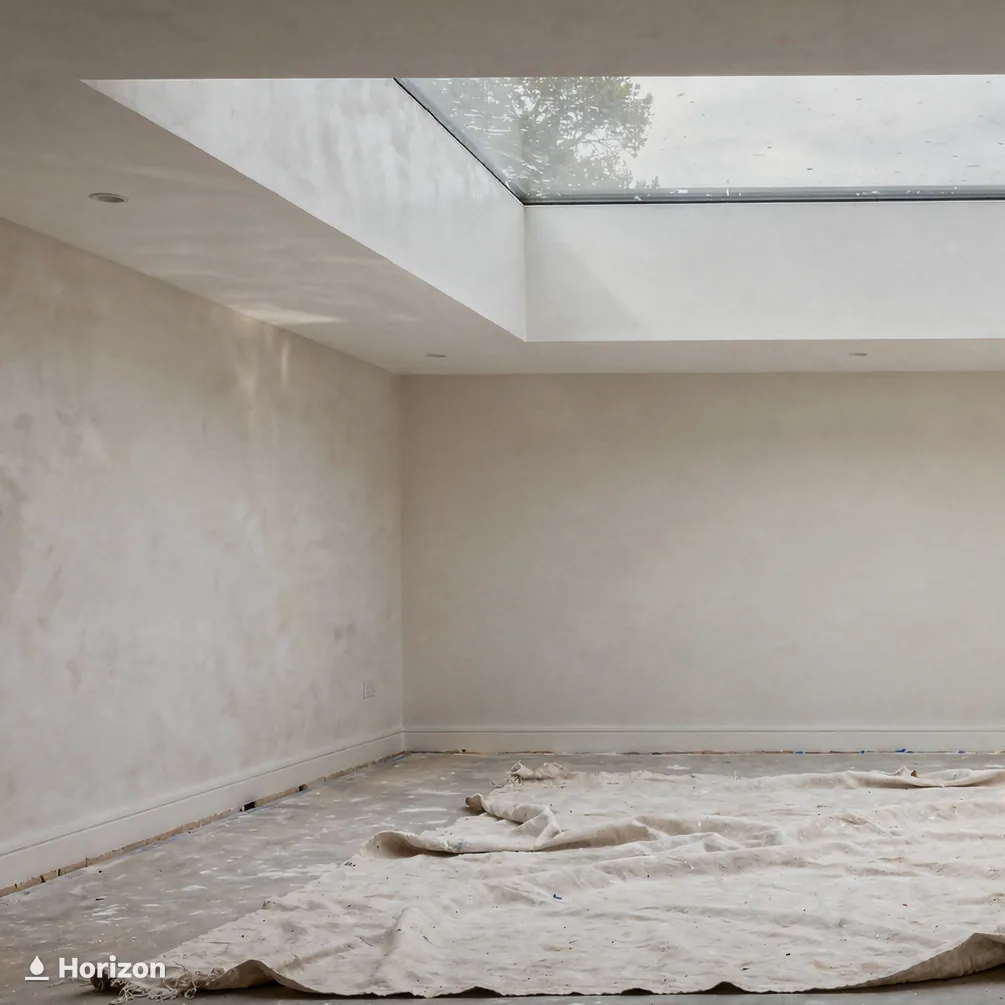
Rooflights and skylights fitted in Cowbridge
Cowbridge, where Georgian frontages meet new extensions: rooflights that suit an old street and still shrug off a wet week.
Free survey / fixed written quote / Building Control notification handled / 10-year workmanship guarantee
Rain behind the Cowbridge frontage
A glance down a market-town street shows only the front slopes. The rear slopes and the extensions behind the houses are where a rooflight tends to go, and that is where rain does its work unseen. A roof window on a back slope has the flashing as its first defence: the kit is made to tuck in under the slate or tile course above and lie over the one beneath, which leaves the wet nowhere to creep in.
Flat roofs behind a main street ask for something else. Rainclear, a maker of flat glass rooflights, recommends tilting the kerb by at least five degrees to minimise water pooling. A rooflight sitting on a kerb that falls the right way empties itself after a shower and stays cleaner for it.
For roofs with a historic look, glazing matters as well as flashing. VELUX describes its conservation roof window with a laminated inner pane, which holds together in the event of accidental breakage, and an outer toughened pane. That construction suits a roof where the glass is seen from a neighbour's window as much as from the street.
Condensation is the quiet nuisance. Steam from a kettle, a hob or a bath drifts towards the chilliest surface around, and that is often the glass. Glazing chosen to meet Approved Document L (Wales) helps, and a vent or an extractor gives the damp somewhere to go.
Dirt gathers on glass nobody can reach. Pilkington lists roof glazing among the uses of its Activ coating, which uses daylight to loosen dirt and lets the rain wash it off.
| Property | Roof | What the roof can take |
|---|---|---|
| Georgian town houses on the main street | pitched | a roof window on the rear slope |
| Converted buildings, as on Town Mill Road | pitched or mixed | roof windows, with the council consulted first |
| Newer housing | pitched, flat extensions | roof windows, sun tunnels, kerb rooflights |
| Rear and side extensions | flat | rooflight, or lantern where height allows |
- WELSH NAME:
- Y Bont-faen
- WARD, 2011:
- 6,180 people
- RAILWAY STATION:
- 1865 to 1951
A bridge town on a Roman road
Cowbridge is a town in the Vale of Glamorgan, and the Welsh name Y Bont-faen carries the bridge in it. Records give it as Pontyfon, then as Pontyfuwch, the bridge of the cow, by 1645. Some scholars place the town on the site of a Roman settlement they identify as the fort of Bovium, and recent excavations have turned up extensive Roman settlement alongside a Roman road. The ward counted 6,180 people at the 2011 census.
A railway station opened here in 1865 and closed in 1951. The main street still holds a number of Georgian houses, among them the former town houses of local families such as the Edmondes and the Carnes. A short way off, the main building on Town Mill Road was converted to homes between 2006 and 2008, and its prefabricated classrooms were replaced by housing in 2013.
From Swansea the town is 28.48 road miles to the south-east, within the 30 road miles we cover. Nearby places we also fit rooflights in include Colwinston and Pencoed.
The town's history sits in its street pattern, and the roofs follow it. Roofs in a town like this are seen from the main street, from back lanes and from neighbouring gardens, and which slope faces which way is noted at the survey. For a house inside a conservation area, the planning decision is the council's whatever the slope.
Mixed ages mean mixed roofs. Town houses of any period can run deep from front to back, and in a deep plan the middle rooms can sit a long way from a window. Buildings converted to homes bring their own roof forms. Newer homes bring flat extensions and loft conversions. Those are general comments on the types, and they do not describe any particular Cowbridge house.
- 1865railway station opened
- 6,180ward residents, 2011
- 28.48 milesto Swansea, road miles
- PLANNING:
- Vale of Glamorgan Council
- CONSERVATION:
- Cowbridge and Llanblethian mapped
- AONB:
- none at Cowbridge
Conservation areas, listing and the Vale's planning team
Planning for Cowbridge is decided by the Vale of Glamorgan Council. The Welsh Government's conservation-area map shows an area named Cowbridge that covers the centre of the town, and a second named Llanblethian whose boundary lies a few hundred metres away. Those distances run from a single reference point in the town, and the map is not drawn property by property, so it says nothing about any one address. Your own house may or may not sit inside a line, and the council can tell you.
That matters, because in Wales a rooflight placed in the roof slope of a house in a conservation area needs planning permission. Our guide to planning for a rooflight in a conservation area in Wales goes through what the application involves. The conservation rooflights page describes the glass made for older roofs.
The Gower AONB lies elsewhere, so a designation of that kind plays no part in a Cowbridge job.
Outside conservation land, a rooflight on a house can sometimes go in as permitted development, and the planning guide for Wales sets out the tests. Not every home starts with those rights. Owners of flats and maisonettes never have them, a council may switch them off for a group of houses by way of an Article 4 direction, and the conditions on a house's first permission can do the same.
A Georgian frontage raises the question of listing. A listed house needs listed building consent for work that would affect its special character, whether the work is inside or out, and the application goes to the planning authority. Cadw is the Welsh Government's historic environment service and is consulted. Check the status of your own house before planning anything, and speak to the council if you are unsure about either listing or permitted development; a Lawful Development Certificate is available where you want certainty on paper.
Building Regulations are a separate route. Putting a new rooflight in generally calls for approval, because the roof has to be opened and must take the weight. Where the work is notifiable, we handle the Building Regulations notification with local authority building control or a registered building control approver.
- DEEP PLAN:
- sun tunnel or roof window
- CONVERSION:
- check with the council first
- EXTENSION:
- rooflight on a kerb, or lantern
Georgian depth, converted buildings and new extensions
Take a deep town house first. When the middle of a house is a long way from any window, a stairwell or a landing can stay dim at noon. A sun tunnel answers that with a dome in the slope and a mirrored tube down through the loft, ending in a diffuser on the landing ceiling. Only the dome faces the weather, and on a drizzly day the landing below gets an even grey-white light.
A loft room under the slope wants a roof window. In Wales a new or replacement one should meet 1.4 W/m²K, or Window Energy Rating Band B. If the window has to serve as an escape from an upper room, it needs to be sized and placed for that; the roof windows page links to the rules, and we go through the room with you at the survey.
When an old unit has misted between the panes, its seal has usually failed, and a misted rooflight replacement restores the view. A VELUX carries its size code on a metal type sign near the head of the sash, and reading it turns a like-for-like swap into a straightforward order; our VELUX windows page explains how to read it.
Converted buildings need a conversation before a design. Conditions attached to the permission that allowed a conversion can remove permitted development rights, so ask the Vale of Glamorgan before settling on a position.
Behind a newer house, a single-storey extension with a level roof wants a flat roof rooflight. In Wales a rooflight should meet 2.2 W/m²K. A roof lantern is the alternative where the ceiling height allows, and where the extension is itself still to be built, the lantern's planning position is one we settle with the Vale council.
Electric opening suits glass that sits out of reach over a kitchen. VELUX supplies electric roof windows with a rain sensor built in, and the sash shuts itself when rain falls, a handy thing over a room you leave aired while you are out.
A bathroom under a roof slope deserves its own thought. Steam rises straight to the glass, so the window wants an extractor beside it and a sash that opens for airing. A handle within reach makes airing a daily habit instead of a chore. Rooms with a basin and a bath are where the habit pays back first. If you are not sure which type a room needs, the centre-pivot or top-hung guide compares the two.
Every enquiry begins with a free survey and a fixed written quote, and the 10-year workmanship guarantee is set down in writing too. Ring 01792 929062 or use the enquiry form.
Old main-street house
- planning permission first in a conservation area
- listing to check before any work
- light needed deep in the plan
Newer or converted house
- rights to confirm with the council
- extension roofs often flat
- conditions on the first permission to read
Asked in Cowbridge
Will the Cowbridge conservation area stop me getting a roof window?
It does not stop it, but it changes the order of events. A new rooflight in the roof slope of a house inside a conservation area needs planning permission in Wales, so the consent comes before the fitting. The Vale of Glamorgan Council decides.
Who do I contact about planning in Cowbridge?
The Vale of Glamorgan Council deals with planning applications for the town. For the Building Regulations side you can use its building control team or a registered building control approver, and the choice is yours. The two processes have different tests and take their own time, so it helps to start both early.
Is a Georgian house in Cowbridge listed?
Not all old houses are. A listed one needs listed building consent for a rooflight that would affect its character, and Cadw publishes listing records. Check yours, then talk to the council. The listing record for a building gives its grade and a description, and the council can confirm what that means for a roof alteration.
How far is Cowbridge from your base in Swansea?
You will find Cowbridge south-east of Swansea, a drive of 28.48 miles, comfortably inside the area we serve.
Could a sun tunnel brighten a landing without cutting a large opening?
That is the idea behind it. The roof takes a small dome and the rest is a tube through the loft to a diffuser in the ceiling. Whether the route is clear of joists, pipes and a water tank is checked at the survey.
Do you price a rooflight from photographs?
A survey comes first, free of charge. After it, you receive a fixed written quote. The form is the way to book it.
Nearby towns we also cover
Bulletin Cowbridge
Book your free survey
- Survey:
- before we price
- Quote:
- fixed, in writing
- Guarantee:
- 10 years on our workmanship, in writing
No obligation. Building Control notification handled where the work is notifiable.